Friday, October 14, 2005

Freedom, Death, and Beauty as Death

A second of the San Diego activists jailed for not wanting to talk about a meeting the feds wanted information on, were released by U.S. District Court Judge Irma Gonzalez down in San Diego (“FBI in da House,” October 5).

Onell Soto, who has ably covered the case, reports in the “San Diego Union Tribune” that Gonzalez finally gave up the ghost after jailing David Agranoff for two-plus months. “[G]onzalez said she considered it unlikely Agranoff would change his mind and testify, and keeping him in jail would only serve as punishment. Agranoff’s jailing for civil contempt was designed to get him to testify, not to punish him for not doing so.”

Well good for Agranoff who did a very difficult thing; performed an extreme act of principled civil disobedience. He took it on the chin for other people.

By the scribe’s count, that leaves one more, Nicole Fink. What’s Gonzalez doing, applying a tough-o-meter to each individual detainee, keeping the tougher ones, or the weaker ones in longer? It’s not working. Let ‘em go.

And now this from [g]overnor Schwarzenegger’s office:

Governor Schwarzenegger Issues Statement on Death of Pasadena Marine

Governor Arnold Schwarzenegger today released the following statement regarding the death of Lance Cpl. Sergio H. Escobar of Pasadena:

“Lance Cpl. Escobar showed extraordinary courage and commitment in serving our country. He will be remembered for his perseverance and determination in fighting for our freedom. Maria and I send our thoughts and prayers to Sergio’s family and friends who mourn his loss.”

Escobar, 18, died Oct. 9 as a result of injuries sustained from an improvised explosive device while conducting combat operations against enemy forced in Ar Ramadi, Iraq. He was assigned to 3rd Battalion, 7th Marine Regiment, 1st Marine Division, I Marine Expeditionary Force, Twentynine Palms, CA. During Operation Iraqi Freedom, his unit was attached to the 2nd Marine Division, II Marine Expeditionary Force.

In honor of Escobar, Capitol flags will be flown at half-staff.

the scribe’s not sure how many of these notices we have posted on highwayscribery, but we know there’s been enough to dissect this peculiar haiku with an informed hand.

The opening paragraph always repeats what the headline above tells you. In this case that the governor’s making a statement on the death of a Pasadena Marine.

This is to beef up the thin gruel of paragraphs that make up these releases, which, when printed out, look like brief office memos from the higher-ups on grooming or bathroom use.

There is not a lot to say about the life of a soldier: their age, always tragic whether young, middle-aged or older; the intimation that some sort of shared pain is being borne at the Schwarzenegger residence; the strange names of a distant land one man’s mania immersed us in; the weapon that caused death and the injuries which comprised that death; the long litany of numeric associations causing one to think about how many things a soldier can belong to and be associated with when riding in a canvas Humvee through a devastated and hostile desert city (and how little they all mean when the moment of last loneliness is at hand); the frayed honor of having the flag dropped half-mast in your honor, shared on some days with another guy who met the same unfortunate fate.

Tough stuff.

Anyway, here’s another released the same day, Oct. 12:

Governor Schwarzenegger Issues Statement on Death of Vacaville Soldier

Governor Arnold Schwarzenegger today released the following statement regarding the death of Staff Sgt. Jerry L. Bonifacio Jr., of Vacaville:

“Maria and I are saddened to hear of this tragic loss. Staff Sgt. Bonifacio’s death is a painful reminder of the dangers our brave soldiers face in protecting our country. Californians are greatly indebted to Staff Sgt. Bonifacio for his courageous service. We send our heartfelt sympathies to Jerry’s family during this painful time.”

Bonifacio, 28, died Oct. 10 in Baghdad, Iraq, when a vehicle-borne improvised explosive device detonated near his checkpoint. He was assigned to the Army National Guard’s 1st Battalion, 184th Infantry Regiment, Dublin, CA.

In honor of Bonifacio, Capitol flags will be flown at half-staff.

And this from Juan Ramón Jiménez:

Ideal Epitaph for a Sailor

One must look through the firmament
To find your tomb.
Your death rains down from a star.
The stone does not oppress you, it is a universe
Of dream.
In ignorance you exist
In everything – the sky, sea, and earth – dead.

Piedra y Cielo/ 1917/1918

Wednesday, October 12, 2005

"La Vedette" does "La Danza"


Okay, we're set. the scribe will read from "Vedette or Conversations with the Flamenco Shadows" to the accompaniment of Omar Torrez' marvelous guitar http://www.omartorrez.com/index2.php on December 15.

The location is 33 1/3 Books at the junction of Alvarado and Sunset Blvd over in the Silver Lake/Echo Park district of Los Angeles, Califas. We hope to see you all there at 8 p.m. (or so). We will read, talk about, sign and sell some books.

Forebearance, Please...


Okay. Maybe there is a God.  Posted by Picasa
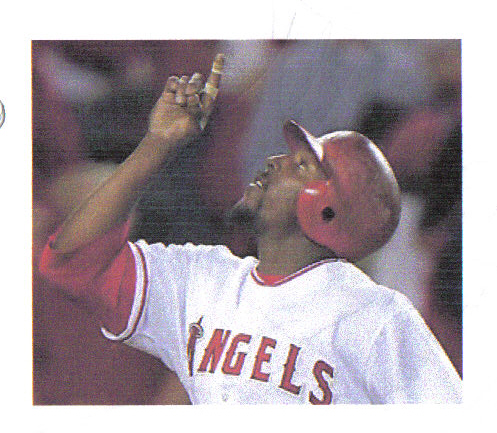
the scribe begs his growing list of readers for a little forbearance. He's pulled a muscle in his back, has a number of in-depth newspieces to write (yes, the scribe has a job), is balancing the demands of husbandry (?) and fatherhood, while keeping one-eye on the television where his beloved Los Angeles Angels are making a run at the title (yes, the snooty, hyperintellectual highway scribe loves baseball).

We've got some projects to post as soon as the air is cleared around here. In the meantime, this from (g)overnor (a)rnold (s)chwarzenegger's office October 11:

Governor Arnold Schwarzenegger today made the following statement congratulating the Los Angeles Angels of Anaheim for their American League Division Series victory over the New York Yankees:

"On behalf of the people of California, I want to congratulate the Angels for their Game Five victory over the Yankees to win the Division Series. Despite playing on short rest and after a difficult loss Sunday night, the Angels dug deep and got it done when it really mattered. Congratulations and good luck on winning the pennant."

If you think there's no intellectual, literary tie-in here, highwayscribery would like to point out that Salman Rushdie, a Yankee fan, told Tavis Smiley last Monday night, "I'm sorry to say, the Angels don't have a prayer."

Salman, Salman, don't you know? Angels live in heaven where you don't have to pray to be heard by the Gods.

Sunday, October 09, 2005

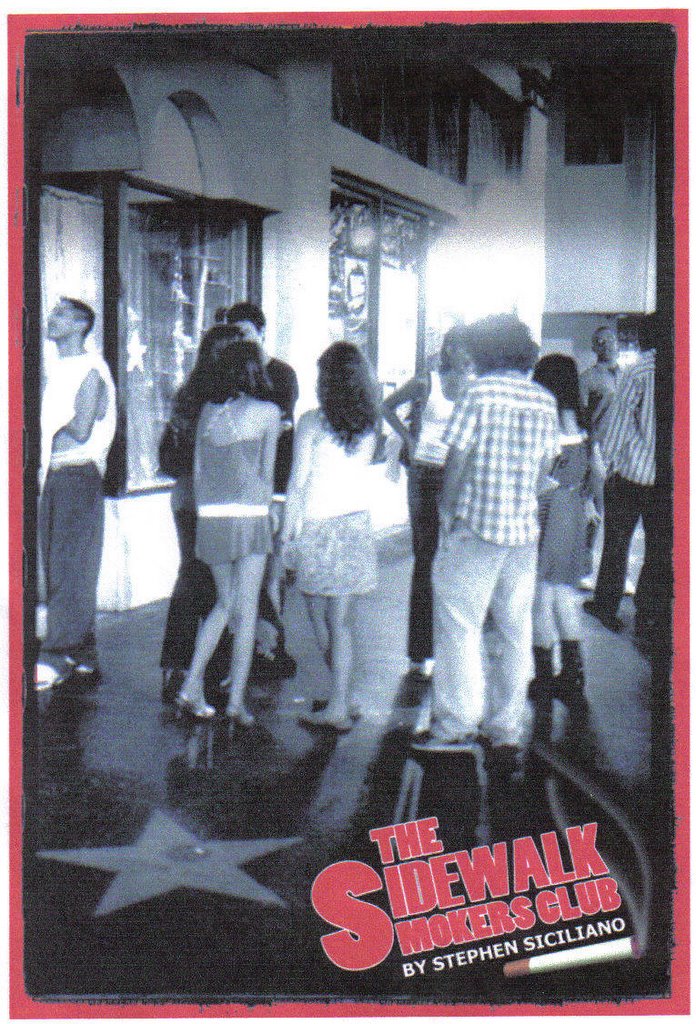
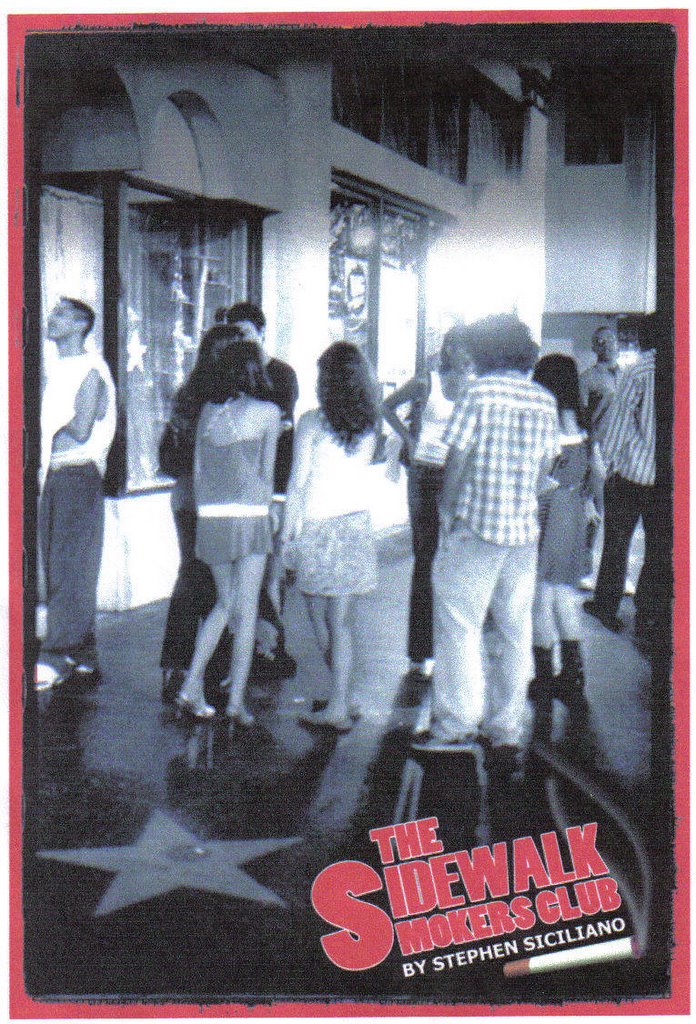
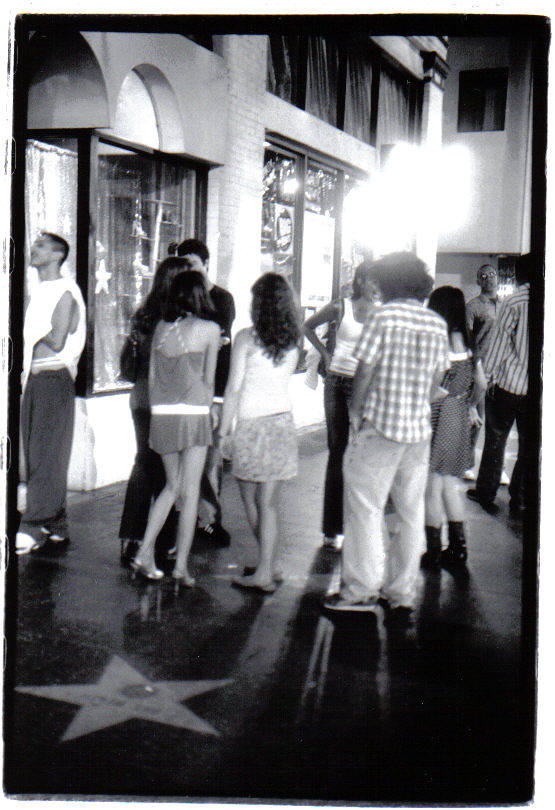
The Sidewalk Smokers Club - Chapter 42


Chapter Forty-two (chapter one ran April 9, 2005)

Now for a bit of housekeeping.

The event at Joya’s Joyas has been repeatedly referred to as the press benefit/press conference. It must be recorded that there were brisk sales to reporter girls of rings and things, from which Joya contributed a percentage of the proceeds to Jordan; no questions asked. Of course, the real benefit was to be reaped from the collected business cards, promises of help, and planned parties with newfound friends the event had yielded. In days following that seminal event, Yvonne, Corey, Randall, and Joya all helped in tracking down leads and asking for help with the lawsuit and related legal expenses. The response had been overwhelming; further testimony to the fact Yvonne’s situation had tapped into some heretofore hidden vein of public sentiment.

She herself felt trapped by the situation confected, walking in a direction that no longer held draw, pulled at both arms by likeable people whom were giving the help she’d asked of them.

But this chapter is not about Yvonne. It’s about Randall and the aforementioned housekeeping was necessary to the explanation of how he became financially self-sufficient without doing a short and clumsy installation covering his monetary wherewithal(s) first.

Generous as Joya, Yvonne had offered, without prompting, to pay he and Corey from the benefit proceeds something out of her own legal fund. Randall accepted. Corey courteously declined, happy to wait and harvest untold riches following the propagation of bum philosophy across the system of flows.

Randall was solvent for the first time in how many years he could not even say and, although the cushion was marginal, it was thrilling for him. He noticed how much easier it was to do well by people, be a cool guy even, when his wallet was stuffed with salad and credit cards were sources of money – juice – rather than persecution.

He could leave that little extra tip which would accumulate interest with the recipient in record time. He could pay off old debts to good friends and do so over a nice meal at his favorite Argentine restaurant. He could toss somebody a joint and make his or her day. And all this accrued to his benefit, rolled over, even. The paid debt came back as a hedge on future financial complications, the meal became an invitation out, the joint came back grown into a full bag of happy grass.

The same way being broke meant bounced checks and bank-initiated punishment, which then marked Randall’s file for the next round of trouble, so it was that when things began rolling his way there was only more good to be gotten.

There was, by way of concrete example, that invitation to the A-list actress’s party. It hovered over him like a bright Moroccan sun of fortune. When stuck in traffic or waiting on an endless line at the supermarket, he thought about this wide-open door to a new world and all was well again. It colored his entire perception of life, which is beautiful under such circumstances if we only let it be so. Randall did.

And this complicated his goal of self-destruction by tobacco. In the same way a rabble-rousing union organizer gets a desk job or a revolutionary quietly recedes from the scene upon finding love and making a baby, Randall grew content so that almost (no absolutes!) every fiber in his body went against the proposed smoke-out of his health.

He expressed this thought to Corey who was the plumber in their partnership.

“You’re invited to that party because of your own master plan,” Corey pointed out. “Every element of it is important and if you don’t see each to the end, we’ll – you’ll – be right back where you started.”

He was 100 percent correct in this. Both statement and example are here injected to demonstrate just how much more effective two people working enthusiastically toward a goal can be than one.

The party itself began for Randall well before his arrival at the star’s house. He had dropped by one of the city’s few surviving humidors to squander his newfound wealth on some overpriced cigars he knew nothing about. And then he pulled off at a discount drug emporium to buy some mouthwash. He drove up into the rich, Spanish-accented hills and marveled at how such different atmospheres as this and the rough surface streets he normally roamed came under the rubric of the same city. Randall did not particularly enjoy the cigar he lit for the journey, but he got a warm sense of satisfaction he’d once believed only possible in the final version of a well-articulated thought, knowing that another constructive step toward the destruction of his health had been taken.

He accidentally passed the A-list actress’s house once in the expectation of something bigger. Next, R. backtracked and located the residence and then had to turn around again to park his vehicle along the woodsy incline. In what is second nature to all urban dwellers, he looked up in search of a sign proscribing his right to leave a car unattended and saw nothing.

He felt a little nervous and was forced to take a deep breath before sauntering up the walkway with the tin of expensive (for him) cigars under his arm.

Randall rang the bell and was half-surprised to see the A-list actress open the door all on her lonesome. Stripped of so much stage setting she could have been any other of the ravishing muses in the world. Out a corner of his eye – the rest of it being occupied with her – he caught a glimpse of at least three A-list actors and actresses whom were daily fare on the covers of magazines in supermarkets across the land. He opted for a cool play and stumbled a little on the intricate Persian rug that covered the floor of A-girl’s anteroom. The stars didn’t mind; they were used to that kind of thing. They’d read the accounts and viewed the telereports of the benefit/press conference for Yvonne. They were totally behind her in the battle against an exploitative media megamonster because, rich as they were, it was to a large degree their fight, too.

He dumped the cigars on his hostess who then escorted him up to a pair of well-known buddy actors and introduced him thusly: “Here’s the leader of The Sidewalk Smokers Club!” The two handsome, thin, utterly charismatic young blades smiled kindly and gave manly pats on the shoulders. She smoothed over her departure with a primer on where the booze and food might be found and then shimmied away leaving a bit of heaven lingering behind.

Randall struck the egalitarian note by pointing out that he was not, in fact, the leader of The Sidewalk Smokers Club, a non-hierarchical organization in which the creative impulses of its ever-changing ranks were never oppressed by someone’s weightier status. Randall had forgotten that those in whose company he now found himself were very dependent upon repeated recognition of their weightier status, but unwittingly recovered when he said, “As bum philosophy holds, he who leads sometimes dies first.”

Bum philosophy did not, up until that moment, hold any such thing, but it would thereafter, for the system was an elastic one that shrank and grew with the necessities of its creators.

And besides, he was playing a role. He was invited as a bum philosopher and by gosh he’d better bum philosophize if he wanted a return trip to this little Eden.

It took him a few minutes to get his bearings. After all, it could have been a dream. Everybody present was young and famous and it rather rattled him to think such people actually hung out together, unbeknownst to him. The guys, with a few colorful exceptions, were good-looking and practiced in the small gestures of the feigned or real boredom that say C.O.O.L. None were quite as original as Randall, just excellent in meeting a pre-established and (almost) universal standard of manhood. The girls were of course beautiful, some less so than on screen and others beyond compare in person. They were not guarded, for they were among their own guild of the gilded and Randall almost fooled himself into thinking their openness had to do with his good looks or beastly magnetism.

He felt a bit the dancing bear. But in the end there was empathy and admiration, for what were any of them but dancing bears of one sort or another?

His hostess, the A-list actress – had invited him in that moment when her social antennae informed that the event at Joya’s was a dirty, nasty, funky hit and the people who had pulled it off were comers. Everyone there wanted to know about Randall’s friends, about the sexy girl who had showed up in the magazine and was stealing all their air time with her gutsy story of taking on the same concentrated media companies in whose hands their bank accounts resided.

In short, The Sidewalk Smokers Club was doing the dirty work everyone present fantasized over, but were too compromised by personal pleasures and possession to act on. Having been summonsed to the head of the class like good little students, each fearfully awaited the day of summary dismissal.

Anyhow it didn’t matter. Not at the moment. The party was raucous. Fabulous stringy, sandy-haired, honey-voiced, loosey-goosey girls grabbed him by the hand and took him from magic room to magic room where it is best to let mystery sprinkle its own insinuations rather than deflate the imagination with demystifying, clinical detail.

One or two of them suggested he stop smoking, but Randall was a delegate from the other world, carrying a banner, and these were the people whom he wanted under that banner. They didn’t know this. They did. They cared. They didn’t. They were taken aback and admiring of the fact he would deign to tell sirens such as they “no” (much as it killed him).

He maxim-ized in his mind: “Saying no to a beautiful woman will get you either nowhere or everywhere,” and promised to do his best to remember it “morning next” as the British refer to the morrow.

R. was having a blast, flirting with drunken effusiveness, but in the end too keen of purpose to blow it with giddiness. And besides, things turned out to be rather natural. One star turned out to be a delicate guitarist, accompanied by the surprisingly heartfelt vocal stylings of what Randall had thought was a rather meretricious comedian. A sit-com silly-girl danced like a crystal nymph with another feature-length actress of higher status, and he was stunned to learn that they were not fakes.

No, these people were special, finely honed instruments. Their having been reduced to commodities for sale was but the ransom for a life of riches. They were worth more, it seemed to him, than the sum total of things they were known for. They were deeper than their tabloid dimensions. So, mindful of their reduction and massification, and given his long past of disdainful rebellion against such things,
why did Randall want to be involved?

Because he did.

Rebellion, he’d decided, was stupid if nobody knew who you were or why you were doing it. The only revolution worth its salt was that acted out upon the stage of conformity. Doomed to failure, it at least provided those with free-spirited temperaments a distinctive role in the battle for success.

The actor Hat Midone, who’d been subjected to this particular discourse, agreed wholeheartedly. Randall gave Hat his card. Hat gave Randall his publicist’s.
R. chose a moment just after the party had peaked – when the A-list actress had opened a pantry revealing case after case of a quality tequila – to depart and, with his head held high lest everyone who was anyone be watching, rejected all pleas and temptations that he stay.

Heading out, the hostess caught up and intimated that this was not the last of it, that there would be more. He kissed her goodbye and coughed roughly enough for those in proximity to notice. Nonchalantly sweeping the room before exiting (stage left as it were) Randall saw that all the cigars he’d brought had been put to use.

Sometimes the world comes around to us.

Friday, October 07, 2005

As Much as You Can Stomach, redux


(!) Posted by Picasa
First things first. Danae Kelley, one of those people cooling their heels (clearly a euphemistic expression) in federal prison that we just wrote about (“FBI in Da House,” October 5) has been released.

we know what you’re thinking, but it’s doubtful highwayscribery’s decision to join this particular fracas had much to do with the outcome, but you never know.

Anyway, she’s out after 74 days in The Big House (see photo post below).

It’s a confusing enough without the scribe muddling things up a little more. We reported how the activists had been sprung by U.S. District Court Judge Irma Gonzalez. Further reading reveals the Ninth Circuit Court of Appeals ordered them sprung while it considered the issues in greater depth, and then reversed itself, once that bit of deliberation was over.

Anyway, the 21 year-old, whose home and mother’s home were subjected to raids by federal enforcement folk, was jailed under an immunity deal that prevented her from claiming a Fifth Amendment right against self-incrimination.

With that kind of immunity, infection may be more desireable. Now the feds have lifted that immunity deal, so her right against self-incrimination kicks-in.

But loss of immunity may mean the feds will go after Kelley with a new set of specific charges cooked-up especially for her.

Follow? That’s okay, Kelley probably doesn’t either.

The point is, you don’t want these people getting you into their maws. Either they’ll jail you, or screw up your life for so long it will be difficult to regroup and carry on once they’ve walked away.

Meantime, the other two activists remain in jail. It is against the law to coerce people into testifying by jailing them. The amount of jail time cannot rise to a standard of “punishment”.

In the scribe’s big book, one day’s too much, but we’re not going by the scribe’s big book.

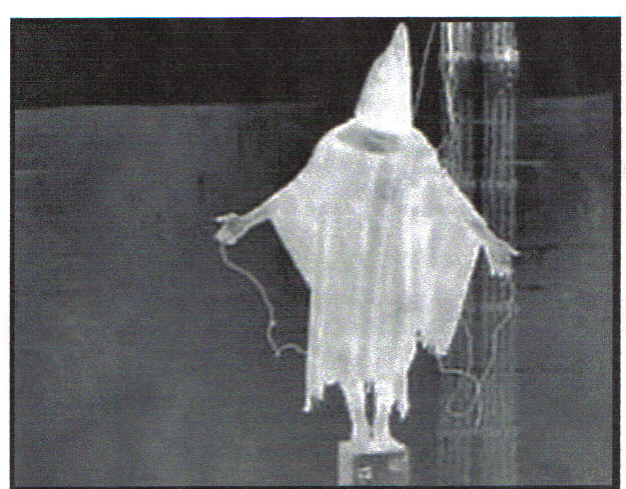
Which is why the Senate’s decision to include a provision preventing the U.S. military from torturing those in its possession is so important.

That happened October 5. The White House has threatened to veto the whole entire defense bill if the Senate gets it into their wacky heads the U.S. does not stand for torture and that such techniques are counterproductive to THE WAR ON TERROR.

Now there’s something you can get behind the White House on. Keeping torture on-hand as an option.

A White House spokesperson said the new requirements and standards would “tie the [p]resident’s hands.”

Sounds like they would keep him from tying somebody else’s.

highwayscribery covered this (“As Much as You Can Stomach,” July 26) earlier and will reproduce the image from that post, because it is both iconic and effective.

Ted Stevens, a (r)epublican senator from Alaska, who has dedicated his career to keeping medieval practices of governance alive, had this to say on the Senate floor: “The techniques vary upon the circumstances and physical location of people involved.”

Please allow the scribe to translate with language he’s picked up from military bloggers in Iraq: “If it involves a sand-Nazi, out somewhere in the sand, you put that Hajib on a leash and let a babe with a cigarette in her mouth parade him around in front of his sand-Nazi buddies.”

There are Democrats remaining in Congress, but since they have no influence, it’s up to other (r)epublicans to paint an opposition.

One such voice is the red-shirted Jacobin, Sen. Lamar Alexander of Tennessee (r) who, according to the “Washington Post,” questioned why “the White House would oppose a measure that codifies military procedures and policies, and reaffirms a ban against torturing detainees. ‘It is time for Congress, which represents the people, to clarify and set the rules for detention and interrogation of our enemies’.”

The time was five years ago, Lamar, and the delay has been ruinous and, at times, deadly for those detained by the freest, most democratic country on earth.

Kudos to senators John McCain (r-Arizona), Lindsay Graham (r-South Carolina), and John Warner (r-Virginia) for holding firm on this here issue.

Free after 74 days. Posted by Picasa

Wednesday, October 05, 2005

FBI In Da House

Earlier in the summer we told you about two activists who’d been jailed for their refusal to testify before a grand jury in a case of arson (“A Kind and Enlightened Country,” July 19).

The case of arson was a unique one, as such things go. It involved what highwayscribery referred to at the time as “a highly successful incident of eco-sabotage” that did away with some $50 million worth of urban sprawl.

The feds have their guy, just no evidence – a hallmark of the Bush administration. So what they did was jail some people who were at a talk the eco-warrior gave, but refuse to testify.

There names are Danae Kelley and David Agranoff, and since the last time we covered this issue, another unfortunate soul has been caught in the web of overly aggressive prosecution. Her name is Nicole Fink.

Agranoff says that under the U.S. Constitution that he’s got a freedom to associate with who he wants to under the U.S. Constitution and is not obligated to talk.

the scribe went to his little, pocket-book version of the U.S. Constitution with faux maroon leather cover that he bought at Restoration Hardware two years ago.

Let’s see...oh, Agranoff is right! It’s called Amendment I and was cooked up by the Constitutional Convention of 1789 wherein the state and their representatives got together to do a little fine-tuning.

This is what it says: “Congress shall make no law respecting an establishment of religion, or prohibiting the free exercise thereof ; or abridging the freedom of speech, or of the press, or the right of the people peaceably to assemble, and to petition the government for a redress of grievances.”

U.S. District Court Justice for the Southern District of California, Irma Gonzalez, knows this, but is keeping them in jail to essentially coerce testimony before the grand jury looking into the big fire.

She sprung them for a while, convinced they would never talk, but now they are back in jail on the judge’s supposition that “never” is a shorter amount of time than “forever” is.

The “San Diego Union-Tribune’s” Onell Soto remains on the story and reports October 5 on the latest wrinkle in this largely off-the-radar case:

http://www.signonsandiego.com/uniontrib/20051004/news_7m4active.html

Aaaaanyway, the Federal Bureau of Investigation visited Kelley’s husband at 6 a.m. on Friday morning, handcuffed he and two friends and sat them down for a three-hour show.

The show was of federal agents combing over their belongings and leaving with their most valuable possessions in tow.

Now, ya see. That’s just plain wrong. Unless you’re trying to intimidate and harass people, you can show up at a reasonable hour of the business day. The element of surprise, the groggy ill-preparedness of the home host is unnecessary. You could also subpoena the stuff first and see if the people are willing to cooperate.

But you want to harass them and you want to make life miserable for their families and friends as well.

You want to completely fuck up somebody’s life, because you’re the government and you get what you want.

That’s why you do this.

The FBI spokesperson says the agency is just doing it’s job.

No it’s not.

Tuesday, October 04, 2005

Waiting for Chomsky


His own man. Posted by Picasa

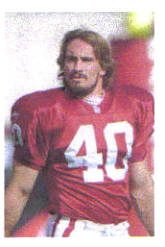
KPFK, a Los Angeles-area radio station with Bolshevik tendencies did a segment Sunday morning on the life and death of Pat Tillman, as described in an article by Robert Collier of the “San Francisco Chronicle.”

Tillman was a man who gave up a multi-million contract with the Arizona Cardinals of the National Football League, to sign up with the military and be part of the hunt for Osama Bin-Laden.

Of course, that’s what everybody except for the scribe believed the administration wanted to do, hunt Osama Bin-Laden.

Which it didn’t.

What it wanted was to start a war with Iraq, which it did. Pat Tillman got caught up on the false current and drew a tour of duty there before finally getting his wish to go to Afghanistan where he died, doing what he wanted, hunting for Osama Bin-Laden.

His death came a week before the Abu Ghraib torture scandal broke. Collier writes that, “The Pentagon immediately announced that Tillman had died heroically in combat with the enemy, and President Bush hailed him as ‘an inspiration on and off the football field, as with all who made the ultimate sacrifice in the war on terror’.”

Which is what the administration does best; twist around the lives and deaths of others to fit the bloody narrative they’ve written for the nation.

It turns out that Tillman was killed by comrades from his own platoon, guys who were guilty, at the very least, of some very sloppy soldiering. In fact, there is little that is inspiring about how he went, just the same old lonely brutishness.

Collier notes that the soldier next to him, when he was shot, testified: “I could hear the pain in his voice as he called out, ‘Cease fire, friendlies, I am Pat fucking Tillman, dammit.’ He said this over and over until he stopped. I then looked over at my side to see a river of blood coming down from where he was...I saw his head was gone.”

Very heroic.

The fact he was killed by fellow soldiers was not revealed to his parents until five weeks later, when Tillman’s battalion got home.

Collier’s article achieves considerable depth regarding the three, count ‘em, three investigations into Tillman’s death and another that is ongoing. The upshot is that there have been contradictions, lying, deletions, and evasiveness from a military clearly hiding something.

Did they want Pat Tillman’s hide? That’s for the conspiracy folks. It’s hard to imagine how they’ll ever “get to the bottom” of what happened in that distant place in a moment of violent chaos.

Here’s the piece: http://sfgate.com/cgi-bin/article.cgi?f=/c/a/2005/09/25/MNGD7ETMNM1.DTL

What interests the scribe, and the reason whereby he is up writing about Tillman instead of catching some hot actress on Jimmy Kimmel Live, is that the crazy football-player-cum-martyr was not what they painted him to be.

Here’s Collier again:

“Interviews also show a side of Pat Tillman not widely known – a fiercely independent thinker who enlisted, fought and died in service to his country yet was critical of President Bush and opposed the war in Iraq, where he served a tour of duty. He was an avid reader whose interests ranged from history books on World War II and Winston Churchill to works of leftist Noam Chomsky, a favorite author.”

Drafted by the Arizona Cardinals of the National Football League, “Tillman not only memorized the playbook by the time he reported for the Cardinals’ rookie camp but pointed out errors in it.”

Then he got a masters degree in history.

“Pat Tillman’s enlistment grabbed the attention of the nation – and the highest levels of the Bush administration. A personal letter from Secretary of Defense Donald Rumsfeld, thanking him for serving his country, now resides in a storage box, put away by Pat’s widow, Marie.”

Marie, she is one of the people with what is known as a shattered life. Wed to a force of a man, physically and intellectually, a success in the most conventional and material terms, but clearly offering much more, she has lost all he proffered.

Ann Coulter felt the loss too and, in a frightening example of Nazi-speak, observed how Tillman was “an American original – virtuous, pure and masculine like only an American male could be.”

From an anarcho–syndicalist perspective, we could not agree more!

There’s a snobby subtext to hits here piece by the scribe. It’s not just that the administration lied about who Tillman was, about how he died, and for what. It’s that he wasn’t your common grunt. Not because he played football, but because he (gulp) read books! Literary books!

It’s really amazing in today’s perpetual idiot entertainment arcade how striking someone who reads books appears to the larger populace and more bedazzling still that more don’t take the hint and pick up one of those old-fangled contraptions, if only out of vanity.

But the war dead are not trophies to anyone. Not to the administration and not to Blue-Staters hungry for patriotic credentials. Their stories should be their own, and nobody else’s.

If Pat Tillman had planned to meet Noam Chomsky before he was killed, people should know about that when his extinguished life is reviewed and celebrated.

Then maybe Chomsky could do a victory lap of his own as an all-American hero instead of living his life cast away as a dirty little anomaly.

The latest litter surely don’t measure up.

***

And the date for our reading at 331/3 books has to be changed (“the scribe reads, Omar Torrez weaves,” Oct. 2). Omar is going to Russia and Egypt and someplace else. the scribe will have to check in with book store and then back with Omar, before getting back to you. Target is first week in December.

Sunday, October 02, 2005

the scribe reads, Omar Torrez weaves


Be there! Posted by Picasa
On November 17 the scribe, with the able assistance of the talented guitarist Omar Torrez (http://www.omartorrez.com/), will read from “Vedette or Conversations with the Flamenco Shadows”.

That’s a tentative date dependent upon whether the elusive Omar can be located and whether the folks at 33 1/3 Books have not been evicted from their location at the northeast corner of Alvarado and Sunset Blvd. They’ve been given their eviction notice, but seem intent upon sticking it out through the holidays before moving into their next space. It’s all very much in keeping with the theme of resistance that is so much a part of Vedette’s life and we’re pleased to work with a positive leftist collective and redoubt. There are many bars of ill-repute in the area to which we may all repair in the aftermath of this most exciting happening, and 33 1/3 have agreed to put a few books up for you to buy prior to the event. the scribe will sign copies of those books or footballs, team pictures, and anything else you might like his elegant script on after he and Omar cook up their flamenco groove. Meantime, this post will run daily, because the scribe has learned that being a pain-in-the-ass works and he’d really like to see you there. Peace.

Saturday, October 01, 2005

The Sidewalk Smokers Club - Chapter Forty-one


Chapter Forty-one

Jordan had no idea of Joya’s plot to save him (by sleeping with City Attorney, and more) so that he could be neither warmed by the gesture nor disappointed by the failure of the first attempt. Of course, like all of us, J. had more than one problem and the morning after the night of Joya’s date, he was in court for the arraignment of his Armenian nemeses.

And things were not going well. If American justice seemed to be functioning fine in its pursuit of him, it was not performing nearly half as well in nailing these obvious thugs to the criminal cross.

To say he had mixed feelings about seeing the man who’d beaten his face would be to understate the thing. Jordan tossed and turned over his decision to press charges.

Anyone who knew him was adamant on the point. “Don’t let them get away with it,” friends crowed, but they were not the ones who would have to see the thing through to the end, which was nowhere in sight really. Every horror story the American criminal justice system had ever produced seemed to run through his head the night before he was to tell the prosecutor whether he was predisposed to pursue a just outcome (or not). This wheel of recurring scenarios included the gang members going to jail, only to manipulate a violent taking of his life from the comforts of that very same prison. He envisioned himself walking up to his doorway a few years hence, someone stepping out from the shadows or bushes or whatever might conceal them in this future home in his mind, and stab Jordan deep in the stomach many times. Then, as he lay there, blood fast leaving his bluing body, the Armenian Power gang would taunt him for a while, laughing with knowledge that were any retribution to be visited upon them, Jordan would never have the pleasure of savoring it.

And he wasn’t being ridiculous. Such things happened a lot. For if the law’s arm was quite as long as legend had it, Jordan would never have been beaten up in the first place. In fact, there are gaps between the time something terrible begins to happen to someone at the hands of someone else and when (if) the police get there. Often, the gap is sufficient for the irreparable to occur.

The thing is that justice – naught but revenge with pretensions of civility – won’t let you sleep. Jordan was afraid of what might happen if he saw the idiots prosecuted to the fullest extent, but he thought he would never be able to look himself in the mirror if he did not. Because, although he was a fellow of happy disposition, J. had a hard time forgetting what had been done to him and when he remembered it, got mad. But at four a.m., when even the insomniac finds little left in the mind mill to churn, the morning paper was dropped on the stairway snapping him from the vicious cycle of frightful ruminations. “Fuck ‘em,” Jordan decided. “Off to jail.” And he closed his eyes to fall asleep for a mere two hours after which Carlos and the plastic chairs awaited.

Now, as he stood in the courtroom, J.'s anticipation level was set high. Two of the guys who had participated in his thrashing had been dropped from the case. The lady prosecutor explained, from a legal viewpoint, the technicalities that prevented their having to face music they had help compose and these were not satisfactory to Jordan. And anyhow it didn’t matter. They could do things her way or drop the case altogether. Justice, he thought, works in the same makeshift manner county hospital does. Everyone knew how busy and overworked the prosecutors were, which didn’t keep them from bringing it up all the time, and so Jordan acquiesced.

This being the situation, the only guy he had a real chance to get was the one who punched him in the face. That seemed, at least, to make some, if not complete, sense. When the lad in question entered, his eyes were demonic in the same way they had been that godawful day. The hair had grown in so as to avoid any associations between defendant and the anti-social organization through which he lived his life. He wore a suit and a tie, was accompanied by a lawyer, his dad, his sweet and suffering mom, and little sister.

But devil-eyes do not lie.

The lady prosecutor, a second-rate litigator purchased by the city’s low salary scale, opened the proceedings and did a serviceable job of enumerating and explaining the charges. The defendant’s attorney, polished and sharp as a platinum razor, rose slowly for effect, addressed the judge in collegial, almost intimate terms, and explained how his client had acted in self-defense and that it was Jordan who should be on trial. J. made a hiccupping kind of noise in response to the tactic’s pure audacity which, in fact, was standard criminal law fare. The lady prosecutor instinctively looked over her shoulder to hush him for the reaction, which was so common to those who did not spend their lives in court and could not understand the strange rules of the game played there. This is what defense attorneys do: point the finger back, try to blow some holes in the claimant’s recounting of the affair, as well as his character, make the judge weary, and successfully eke out a one-month sentence of community service cleaning graffiti.

But none of this was normal for Jordan and it infuriated him that he must needs be forced to sit and participate in the charade. Still, it was the best system anybody to date had been able to cook up and once the “not guilty” plea had been set and the contending parties escorted out through separate doors, the lady prosecutor explained that it was just as well. “This takes a long time and he’s scared to hell of returning to jail. It will be like being grilled slowly over a barbecue.”

Jordan thought a barbecue, a real one, not a metaphorical one, was just what the situation called for, but he went along with the metaphorical one. A second court date was set for some time much later in the future and he would try to be patient.

Meantime, the hearing had produced two negative responses in Jordan. The first was that it stirred up a lot of sediment lying loose at the bottom of his soul, sediment that made him fearful of things again. Second, it had renewed his utter detestation of all Armenians, young, old, or crippled. He saw them as savages from an ancient land who didn’t know how to behave and, instead, conformed to petrified traditions of family bonding regardless of whether one among them had done wrong or not.

Indulging in a time-honored American reaction, he purged from memory the fact of his own immigrant beginnings and wished that these Armenians would just all go straight back to where they came from.

Wednesday, September 28, 2005

The DeLay is Over


Stand down...boy. Posted by Picasa
Yuckety-yuk-yuk.

the scribe was going to post a loving essay/homage to the Andalusian poet, Juan Ramón Jimenez today, but Tom DeLay got indicted. Heck, the effect these crooks are having on American culture is staggering. highwayscribery has lit blog pretensions, but with (r)epublicans (Safavian, Frist, Brown, Abramoff) clogging up the courtrooms, deposition offices, and hearing chambers of this country, it’s tough to get around to the poetry.

Not that the Democrats are strangers to this kind of stuff, they’ve reveled in it, which is what got them into their present troubles.

But these are the (r)epublican “revolutionaries” of '94 with their “honesty and integrity,” their no government purity, and their “Jesus is Lord” cant.

So let’s see what the impact of a political alliance with God has been.

The “New York Times,” quoting directly from the indictment handed down there in Texas, said: "The defendants [DeLay wasn’t alone in this], entered into an agreement with each other, or with Texans for a Republican Majority Political Action Committee, to make a political contribution in violation of the Texas election code...”

The Texas election code! Imagine how loose that thing is and how foul one must have behaved to well, run afoul of it.

Back to the indictment: “The contribution was made directly to the [r]epublican National Committee within 60 days of the general election.”

What’s it all mean you ask?

Let the scribe connect some dots for you. After juicing the (r)epublican contingent running for office with ill-gotten corporate gains, the party took control of the Texas legislature for the first time since U.S. Grant sent the army down to Austin and put nigras and nigra-lovers ta runnin’ things.

That was back when Democrats were for slavery and Republicans against it (now it's the other way around).

Anyway, the (r)epublicans elected on corporate money arranged for by DeLay from his powerful perch in Washington D.C., couldn’t wait until their seats were warm to redraw the congressional districts in Texas to suit their aims, needs, and ambitions.

What’s wrong with that?

Well, back when legislators made believe they were gentlemen, they made a gentlemen’s agreement about when districts would be redrawn...and this was not when it was supposed to happen.

Texas Democrats, who could smell DeLay’s skunky hands all over the affair, literally left the state so that there would be no quorum and the redrawing would thus be stalled.

In a moment of infamy, DeLay contacted the U.S. Department of Homeland Security to try and track these legislators down and return them to Texas so he could ram the redistricting through.

That was, on top of unethical, probably illegal. What with the dikes of (r)epublican suppression finally collapsing (pardon the Katrina metaphor), time may come when DeLay has to face the music on that affair, too.

Anyway, they managed to round up one turncoat Dem, of which there are always a few on hand, to return and give them their quorum. They redrew the districts and the (r)epublicans subsequently picked up SIX, count ‘em, SIX new Texas seats in the debacle of 2004.

And now the bill’s due.

DeLay is the House majority leader and a damn harsh one. His own political kin refer to him as “The Hammer” and his announcement this morning that he would stand down for a while, is a welcome respite for our democracy and citizens.

Stand down...boy.

Does this mean the elephant tribe will be swept from power in the 2006 midterms? Don’t place any bets. It’s just a matter of time before Scarborough and Hannity and the rest of the paid hacks whom work for the administration go on-air and explain how all the corruption is good and that if the (r)epublicans didn’t have to contend with an opposition made up of people WHO HATE AMERICA they wouldn’t have to grub off corporations to win elections.

All of which would be a lot more fun if there weren’t a war going on, but there is. Here are two statements issued this very morning by California’s (g)overnor (a)rnold (s)chwarzenegger:

[g]ov [a]rnold [s]chwarzenegger today released the following statement regarding the death of Staff Sgt. Daniel R. Scheile of Antioch:

“Staff Sgt. Scheile stood proudly beside his fellow soldiers and fought with fortitude and bravery. Maria and I send our deepest sympathies to Daniel’s family and will keep them in our prayers. His noble sacrifice will not be forgotten.”

Scheile, 37, died September 24, when an improvised explosive device detonated near his M113 armored personnel carrier in Baghdad, Iraq. He was assigned to the Army National Guard’s 1st Battalion, 184th Infantry Regiment, 3rd Infantry Division, Oakdale, CA.

In honor of Scheile, Capitol flags will be flown at half-staff.

****

[g]ov. [a]rnold [s]chwarzenegger today released the following statement regarding the death of Sgt. Brian E. Dunlap of Vista:

“Maria and I want to convey to Sgt. Dunlap’s family that we are forever indebted to Brian for giving his life to the cause of freedom. Californians are deeply grateful for his courage and dedication to service of this country.”

Dunlap, 34, died Sept. 24, from injuries caused by an improvised explosive device while conducting combat operations against enemy forces in Taqaddum, Iraq. He was assigned to Marine Forces Reserve’s 2nd Battalion, 23rd Marine Regiment, 4th Marine Division, Los Alamitos, CA. As part of Operation Iraqi Freedom, his unit was attached to 2nd Marine Division, II Marine Expeditionary Force.

In honor of Dunlap, Capitol flags will be flown at half-staff.

Tuesday, September 27, 2005

We Blame the Victims

The Gray Lady, our formidable “New York Times,” ran a Web page story on Monday night Tuesday morning (now gone) on how the victims of Katrina are about to be screwed by the bankruptcy reform bill passed by the (r)epublican-led Congress and signed by their friend in the White House.

Here’s the lede from Mary Williams Walsh and Riva D. Atlas: “When Congress agreed this spring to tighten the bankruptcy laws and crack down on consumers who took on debt irresponsibly, no one had the victims of Hurricane Katrina in mind.”

Were they capable of such clairvoyance, our congressional leaders would have kept it out of the picture anyway.

There is nothing to help distinguish “responsible” consumers in trouble, from those that are not, and the effect of the bill was to deliver goodies to the (r)epublicans favorite welfare target – corporate America.

Of course, as the article notes, “[M]any once-solvent Katrina victims are likely to be caught up in the net intended to catch deadbeats.”

Again, that’s because a net’s a net. It’s dropped for tuna, it kills dolphins, and so it goes, the ham-hand of (r)epublican governance.

The article goes on to point out that Democrats, with some truly compassionate folk from the other side of the aisle, wanted to “reopen” the bill and make sure storm victims, which would be pretty easy to prove if you were one, get a little relief from the new bankruptcy regime.

And here’s a surprise: “But House [r]epublicans, who fought off a proposed amendment that would have made bankruptcy filings easier for victims of natural disasters [that was a worthy cause], said there was no reason to carve out a broad exemption just because of the storm.”

Well, how about a not-so-broad-exemption that says if you lost everything in the hurricane, you get a break from hounding creditors?

Rep. F. James Sensenbrenner (r), who chairs the House Judiciary Committee, said “no” to legislative relief on the hurricane front and said the lawmakers who lost the long fight over the law, “ought to get over it.”
.
Those who “lost” you see. Not Americans, but winners and losers.

For those of you burdened with the abbreviated historical memory most Americans possess, Sensenbrenner’s one of the pieces of shit who wasted the country’s time, and abandoned its security, to the tiresome impeachment President Clinton.

Here’s this prick’s number (202) 225-5101. the scribe has already called him, you should too!

According to Salon.com, Rep. Sheila Jackson, a Berkeley Democrat and the only person in the House to oppose the original resolution authorizing (w) to go to war, had this to say at the time of the bankruptcy bill’s passage:

“Families that are affected by natural disasters such as a hurricane in Florida or the mudslides in California should not have to apply their scarce relief effort monies to bankruptcy debt. The intent in providing federal and state monies to families who are victims of such natural disasters is to relieve the burden that the disaster has caused, not to increase their net worth. Bankruptcy reform should address many specific issues, such as the negligent mismanagement of money, but to hurt those who are already suffering from flooding or a collapsed roof or house that has gone out to sea is absolutely ridiculous.”

Ridiculous!

And why, cooking under klieg lights Katrina hath summoned, would a (r)epublican already nervous about his midterm election prospects hold firm on screwing victims?

Because lobbyists for credit card companies are holding the reins and riding them hard, whispering in their waxy ears: “We’ll take their money no matter what the circumstances.”

That’s the free market folks. Anyone who’s ever called Capitol One or Aspire for a little love and understanding knows what I’m talking about.

But it’s all okay, because here in the U.S. of A., we blame the victims who are are the last ones able to help themselves and hence the easiest pickings for those who are stronger, for those who would prey.

Monday, September 26, 2005

Disarming an Armory

It has been reported that the Irish Republican Army (IRA), successful purveyors of violence against civilian populations for decades, has been disarmed.

We don’t want to discourage efforts to curb armed violence and applaud the development with the caveat that it is good so far as it goes.

Disarmed, the IRA can rearm in a minute.

It has always been a theory almost exclusively the scribe’s that the panorama of endless violence that threatens each of us in every corner of the world can be tied to the successful marketing of arms worldwide.

People need them, so the sell’s not hard, but were it that every global industry was as successful at penetrating the nooks and crannies of the market in the way the arms-peddlers are.

We are reaping what they, and the governments that sustain and patronize them, hath sowed. A world awash in arms. Arms available in a flash for a price.

Back when the scribe was young and toying with insurrection as politics, he lamented to a friend, a former Marine, that arms technology was getting so advanced that all street-born rebellion would soon be crushed.

Not so, Joe Bender said, “the technology always trickles down to the street.”

And the spiral of available violence soars.

And so it goes. In Mesopotamia, a bunch of guys using washing machine timers to trip their bombs have locked the mightiest army the world knows in a deadlock.

The IRA can get money and if they can get that, they can purchase the violence they feel they need. Walk across the street to the pub, order a pint, pick up a phone and make a call. The rest is an old habit.

As it is for too many others.

In the Organized Violence on a Large-Scale Department: It must be observed that the war protests over the weekend failed to garner much resonance in the media. They were not ignored, rather treated with journalistic time and courtesy, but off-pitch in the political moment.

Such are the perils of grass-roots politics. While the movement was marshaling its troops and resources over a five-month period a tropical hurricane shoved America a few steps forward into history.

Folks ended up with a better story for bringing down Bush, who went ahead and brought himself down anyway.

But the war is burning under the surface like nobody’s business. The situation worsens, the ship of state rudderless, the administration lost without an election to aim for, and the country slipping from their hands and out of anybody’s control.

Saturday, September 24, 2005

The Sidewalk Smokers Club - Chapter 40


Chapter Forty Chapter Forty (Chapter One ran on April 9, 2005).

Joya was downtown where penniless painters, homeless people, and municipal employees with overstated titles spent their days.

It was a part of the city not without charm if you liked grime or cigarette butts smashed black and rust into dead concrete. Connoisseurs of the past could find a brass spittoon and trolley track residue there with a lustrous patina of soot to boot.

During the day it had the ol’ hustle-n-bustle. Short, brown and hook-nosed garment workers filled the buildings of its historic core and packed its streets and buses at dusk. At night, skulking shadows of discarded and lonely spirits hung like cutouts on the Devil’s Christmas tree.

Not that folks hadn’t tried to improve the described state of affairs. Quite the contrary. Downtown was a veritable test-tube of urban experimentation. Billions had been poured into it over the years in an effort to combat the passion of the populace for a front lawn and/or backyard. It had not worked and probably never would, but there were pockets of improvement and these were utilized by the banking class, a smattering of industrialists, and the indefatigable lions of City Hall who never tired of trying to make the city center something other than what it was, something like it had once been.

Naturally, not a single plan for renovation ever proposed even mentioned the unfortunate who lived there. Instead their focus was on where to put a superior breed pulled in from outlying areas by the promise of boutiques and coffee shops.

Joya was riding around in a fancy car that a city attorney had no business owning, loving the whole strange visit. It was like parachuting into another country or a movie set where people lived in cities they no longer live in. She made icky faces at the sight of canker sores on the bare feet of those not as fortunate to enjoy a pair of coconut-clunking big boots. She wondered at the reaching buildings and at what it might be like to live boxed-off, up in the sky. The city attorney was pointing out triumphs of architecture and style that she would have never noticed because the oppressive misery matrix overwhelmed whatever pockets of beauty enduring.

She found him to be enthusiastic about efforts to change things and the role he played, or claimed to play, in them. Driving with one hand, city attorney used the alternate appendage to enumerate with manicured fingertips the monies to be sprung for the renewal of opera houses, art museums and other such stuff attended, however lamentably, by a handful of people with time for specialized tastes and refinement.

She looked around her and had mostly sad sightings. She thought how there probably wasn’t a thing that could be done to revive a place that everyone had run from.

Joya said, “Well hell! Before the opera house they ought to put up a few portable toilets so they don’t do their business in the street.”

“Already have,” he said assuredly, “but the prostitutes use them for places to entertain their johns.”

“They use the john for the johns!”

She found this funny, but he was permitted, under no circumstances whatsoever, to laugh at something like that. He played it serious and it was quite beyond Joya how this man, dedicated to public service, found the strength to carry on with so much evidence as to the utter hopelessness of it all. Still, she couldn’t help but admire his ability to carry on the good fight.

Of course, the good fight was, in the end, all about career and the upward helium drift of the ambitious politician. He stood as yet another example of undeniable wisdom in the modern master-plan for harnessing a person’s selfishness to the (hopefully) commonweal’s benefit.

“See these buildings?” And he waved his free arm all around them. “During the day they’re filled with sweatshops; long, sweeping, street-long loft spaces packed with hundreds of Mexican girls and boys sewing the clothes you and your fashion-frenzied friends pay so much money for.”

Joya thought that was something of an odd thing to come from the mouth of the city’s chief enforcer of laws and she said so. “Aren’t sweatshops illegal?”

“Of course,” he said in apparent mirth.

“Well why don’t you do something about it then?”

“What can I do? That’s an imposed reality, from on-high.”

“What about the lesbian city councilwoman?”

“Ha!” and he chuckled. “She has even less power than I do.” Joya wasn’t rock-solid informed on the hierarchy of city officeholders so it was all good information.

“What if she became mayor?” She was curious.

“Then she’d be a weak mayor.”

“We couldn’t have that,” she tried to sound cynical.

He shrugged. “Depends on just how much bidding you’d like the mayor to do on your behalf. On what you’d actually like to get done.”

“What if I wanted to get a lot done?”

“I wouldn’t expect much from a lesbian.”

(Ooops)

Joya was enjoying a little game people with alternative sexual tendencies like to play which is not available to, let’s say, Black people who can never dissimulate their skin tone. It was not fair either, and was beneath Joya, but the gambit did not go too far because the city attorney suddenly began a winded endorsement of the lesbiancitycouncilperson: “Nothing’s been handed to her. This game is hard enough without having to be scorned by a good many of your fellow citizens. She’s alright, I like her.”

He pulled up to a valet station in front of a well-lit and beautifully designed restaurant located at the bottom of a tall building on an otherwise abandoned street. Slumping, disjointed collections of dirty laundry rumbled close in only to be chased away by the security guard. “That’s alright, that’s alright,” said City Attorney (as Joya liked to call him), “let ‘em come here.” And he ripped some bills from a roll and handed them to three different beggars.

“Hey City Attorney, those are twenty-dollar bills!” Joya jumped at his showboating.

“Ah, if you’re going to give them something, give them a meal.”

Where Joya came from, City Attorney was what they called a liberal, but he didn’t seem half-bad.

The restaurant itself was all exquisiteness and fine service. Joya was no novice, no innocent country girl (though she could play the part) and this was no introduction to a better world. She knew how to behave and knew how to enjoy and once they stopped talking about politics some equilibrium was restored to the power balance between them. She matched his city bigwig aura with her own qualities of certified glossy girl and fancy piece of sex; a creature that commands vast privileges when her gifts are properly marshaled.

Cautious as he was about public image, and leery as she was about losing control in the company of a powerful man, they both got a little tipsy on martini juice. He called it ‘mind syrup’ and she laughed at the way he was able to stimulate her. He never made the clumsy move and his brilliance bathed in halo light things that would have seemed uncouth in others. “He is,” she kept saying to herself, “not a prick.”

And oh, how she had wanted him to be one for there was business at hand and skinning a skunk is easier than skinning an otter.

The place was winding down, the dinner was inflating with pauses both pregnant and sterile, and Joya asked the waiter if it were alright to have a smoke.

This made City Attorney uncomfortable for two reasons; the first being more obvious than the second. He didn’t want to be involved in breaking a law given it was his job to enforce it. But when he protested on this count, Joya slyly brought up the matter of sweatshops.

He’d always thought he desired a girl interested in the issues, but wasn’t so sure now, for he had a politically correct answer that would prove unsatisfactory to this rather unique specimen.

Second, and more unsettling, was the fact he felt she was wielding his power. After all, why would the waiter or restaurateur deign to piss-off the city attorney by telling his date she couldn’t smoke a silly cigarette?

And like all powerful people, he decided not to let it happen. City Attorney took a deep breath and resorted to his first reason with a sweetener thrown in to avoid the comebacker he was anticipating. He said it was against the law, that it wasn’t right for him to be seen breaking it, and that he’d be glad to stand with her, even share the cigarette if she would only “please” agree to do so outside. She thought it over. The evening’s success hung in the balance when he suddenly threw in the clincher, thrilled as he was to be hanging with a woman at once so attractive, cool, yet up to his speed: “I’ll be an associate member of The Sidewalk Smokers Club...for a minute.”

A big wide smile cracked across her face at the reminder of her new friends and the notoriety they had achieved.

Oh hope. The motives of everyone’s favorite person/character in this screed were not so pure, even if they were devoted to the benefit of another.

“Alright,” Joya shimmied to her feet with just enough booty action to catch his eye.

Outside she warmed to her purpose; began to work on him about the city ordinance against smoking indoors. City Attorney briefly yearned for one of the many bubbleheads who’d dated him without an inkling of what it was he actually did. “I wouldn’t touch that with a ten-foot pole,” he said. “There’s nothing to be gained from it, politically speaking.”

“City Attorney, you have a ten-foot pole?”

“Yes.”

“You could get us our freedom back,” she countered.

“Who?”

“The Sidewalk Smokers Club, hon!” and with that she gave him a peck on the cheek.

His jaw dropped. She stuck the cigarette in his mouth. He instinctively scanned the area, without moving his head, to register whom was watching the scandalous act and all he saw was a Latino valet who was probably unregistered to vote, if not illegal altogether. The Latino vote was going, in any case, to another candidate. So he relaxed and drew upon it – the cigarette. There was that slight hitch in the chest endemic to nonsmokers who choose to break their golden rule on some special occasion and he made the proper adjustment before pulling twice.

It hit just right. His taste buds came alive with the memory of his meal (extending its pleasure-time) and the brown-leaf alchemy combined. It returned him to another time, long ago, underneath the bleachers in a wintery place where the cold beer adjusted his body temperature to the surroundings and rosy-cheeked girls promised unfathomable ecstasies in the dark.

“I’m really having fun being in your club,” he told her and Joya realized that something had gone terribly wrong. First, she found herself liking this a lot, and that was not supposed to happen. She’d gone undercover and let the role overtake her. Second, the night had grown so pleasant and glowing that her further plan for talking some soft sense into City Attorney about his pursuit of the Angel Without
Mercy now seemed inappropriate.

Instead, he drove her home. They sat quietly. This cultured man and his well-stacked stereo system delivered a layered piece of orchestral musings that framed perfectly Joya’s interrupted night. She wanted sex. Any kind of sex. They sealed things off with a kiss and a promise to meet again.

She clip-clopped to her house, swaying this way and that; a tall building in a growing swirl of wind and energy.

Friday, September 23, 2005

The Animals


Fears of West Nile Virus in the wake of Katrina evaporated when it was realized that the hurricane had scraped the landscape of birds to carry it.

An environmentalist and journalist spot a swamp gator five miles out over the gulf. Factory farm animals, cooped-up and immobile are wiped out.

It has been suggested that many stayed behind to wait out the storm, not because they did not have the money to leave, but sometimes to stay with their pets.

Now, in the exodus from Houston, pets are allowed, recognized by the force of the love behind them, into the American family.

The story of Katrina was the story of all living and dying things.

And there were good chapters to the unfolding story. The Humane Society of the United States actually beat FEMA into the region. Ready with a plan they began to rescue and place animals that would otherwise have died.

Here are some photos from the rescues and a request for money to keep them going:

http://www.hsus.org/

Here is lightning strike campaign they are launching that urges (p)resident Bush to come up with the money needed to save the animals still remaining, and close to death. Here are some contacts they are urging you to call:

https://community.hsus.org/campaign/katrina_governmentresponse

Along with the undeniable and disarming generosity towards the New Orleans community, Americans have shown a unique understanding and ability to connect with animals that puts the lie to portraits of an insensitive and selfish people.

Although we have our moments.

And the media has shown a good eye in capturing the animals’ suffering and heroism. Eye upon a national sentiment when it comes to sentient beings.

(Although they definitely have their moments.)

We feel and empathize and suffer. The battle is over whether to expand our capacity or diminish it.

Wednesday, September 21, 2005

From the Governor of California

These two announcements from the Governor of California:

Governor Arnold Schwarzenegger today released the following statement regarding the death of Sgt. Alfredo B. Silva of Calexico:

"As a devoted soldier, Sgt. Silva set an example of courage and determination that all Californians can admire. Maria and I send our prayers to Alfredo's family during their time of mourning."

Silva, 35, died September 15 in Baghdad, Iraq, when an improvised explosive device detonated near his HMMWV during patrol operations. He was assigned to the Army National Guard's 1st Battalion, 184th Infantry Regiment, 40th Infantry Division, Modesto, CA.

In honor of Silva, Capitol flags will be flown at half-staff.

Governor Arnold Schwarzenegger today released the following statement regarding the death of Lance Cpl. Shane C. Swanberg of Kirkland, WA:

"Lance Cpl. Swanberg committed himself to protecting the United States and our ideals, and we must never forget the sacrifices made by all who serve our country.

Maria and I send our heartfelt gratitude to Shane's family and loved ones."
Swanberg, 24, died September 15 from an explosion resulting from indirect fire at Forward Operating Base, Camp Ramadi, Iraq. He was assigned to 3rd Battalion, 7th Marine Regiment, 1st Marine Division, I Marine Expeditionary Force, Twentynine Palms, CA. As part of Operation Iraqi Freedom, his unit was attached to 2nd Marine Division, II Marine Expeditionary Force.

In honor of Swanberg, Capitol flags will be flown at half-staff.

Tuesday, September 20, 2005