Tuesday, October 01, 2013

"The Legend of Carmen Amaya" by Natalia Ramos

Here's a link to a poetic tribute by flamenco dancer and writer Natalia Ramos of Madrid. They are dedicated to la flamenca Carmen Amaya on the 50th anniversary of her death.

Stephen Siciliano, highwayscribery's inimitable and anonymous alter ego, translated two of the poems from Spanish to English.

The presentation was published by Alison Mackie, an author and painter whose work amplifies and defines her passion for the Gypsy peoples.

Enjoy

Friday, July 05, 2013

"Ninfas" por Stephen Siciliano


Ninfas
(a mi prima Pilar)

Ella hablaba con su guitarra
pero ésta cantaba otra canción

Levantó su vestido florentino
tocando al agua, descalza
temblando el río en los rizos
de su cabellera.

Tapaba su boca
tan miedosa subiendo la cuesta
por llantos plañideros
y detrás de ellos
ella, galopando

"¡Soccoro, alguien!"


Y llegó la otra
pero ella le huyó
y durmió
y soño con la canción
de la otra
despertó en el alba
y levantando su vestido
hasta el muslo
tocaba, temblando,
el río.

Ronroneó. Y eso sin saber por que.

Le hablaba la canción a su guitarra
y cantaba cuando se
la devolvio en melodía

Y llegó la otra
pero ella le huyó
bajando la cuesta
con su guitarra.

Notándose un silencio
y dudando que le devolviera
más canciónes
y dudando en volver
a dormir de esa manera.


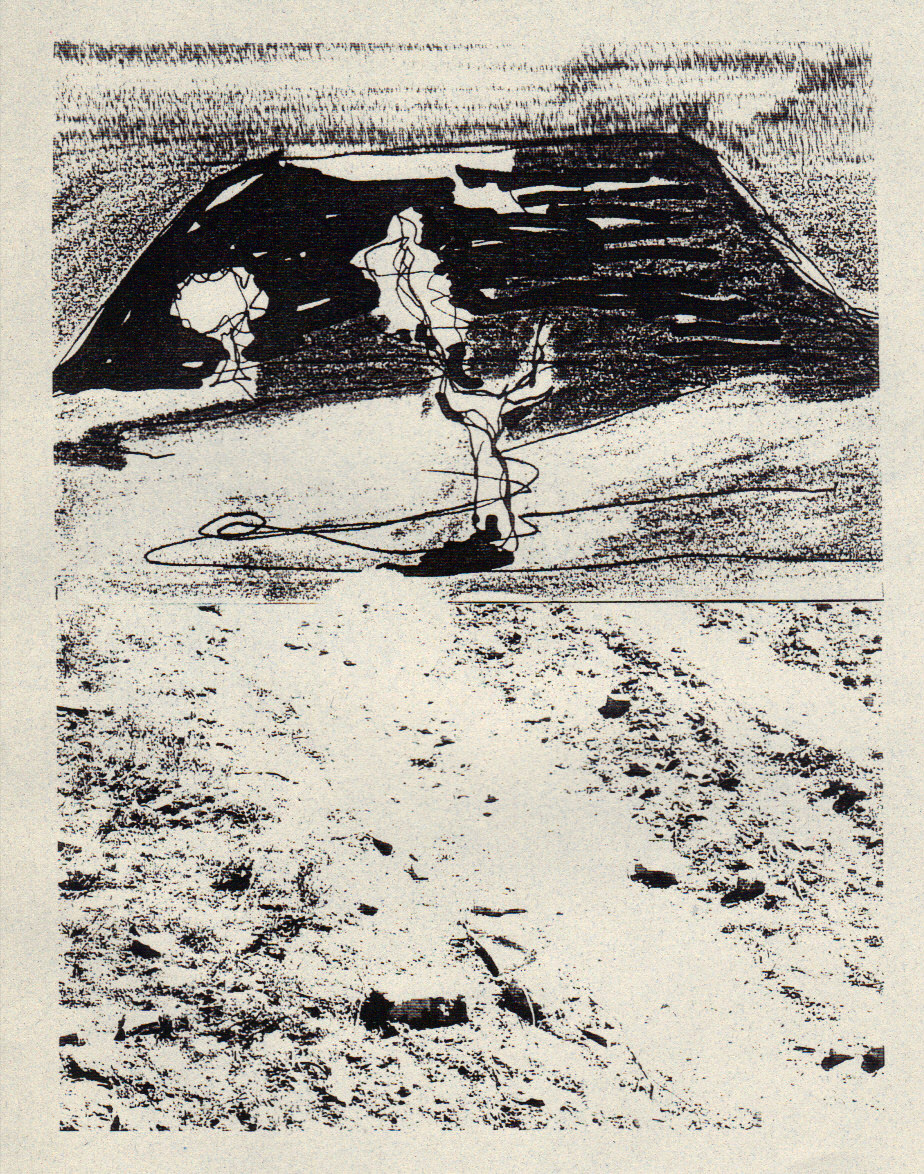
(dibujo de Jóse Pérez de Lama Halcón)

Thursday, June 20, 2013

Anne Theroigne: Portrait of a Portrait of a Lady


Sometimes bit players steal the show.

That is not to say the historical figures of Danton, Desmoulins and Robespierre are upstaged by the sparse appearances of Anne Theroigne in Hilary Mantel's
"A Place of Greater Safety: A Novel," but she certainly adds to the conversation.

This post is both about a fascinating person, and about the author's masterful crafting of a secondary book character.

Throughout this expansive historical novel, Lady-Anne Theroigne de Mericourt surfaces, burns and submerges, resurfaces again, lighting the dank torch-lit streets of ragged and unjust Paris...just a few passages, evocative ones, transmit her flavors.

Late Entry

Camille Desmoulins, pamphleteer extraordinaire of the revolutionary cupola, first stumbles upon Anne at a theater audition where she is being humiliated.

It takes place at page 118 of this 748-paged literary chronicle: "She was about twenty-seven, he thought; small bones darkish brown hair, snub nose. She was pretty enough, but there was something blurred about her features: as though at some time she'd been beaten, hit around the head, had almost recovered, but would never quite."

They exchange barbs before she submits that her future looks bleak. Desmoulins wants to know what she has done in the past when faced with a dry spell between acting stints:

Answer: "I used to sleep with a marquis."

"There you are then."

"'I don't know,' the girl said, 'I get the impression that marquises aren't so free with their money anymore. And me, I'm not so free with my favors.'"

She then establishes her unique status as a free-ranging woman when divulging to Desmoulins her plan to meet contacts in Genoa.

"She put her cheek on her hand. 'My name is Anne Theroigne.' She closed her eyes. 'God, I'm so tired,' she said. She moved thin shoulders inside the shawl, trying to ease the world off her back."

This is an introduction to someone mordant, socially astute, battered, yet unyielding.

She is being marginalized by fading beauty and diminishing artistic talents. Anne Theroigne is afraid and her future actions reveal she thinks the government, or society, or somebody, should do something to arrest her tailspin into the gutter.

This is Theroigne before the revolution. And this is her France.

Once the deluge is unleashed, Desmoulins is out in the street doing what he does best, rousing the rabble. Among them is a "pretty young woman with a pistol in the belt of her riding habit, and her brown hair tied back with a red ribbon and blue one."

These are the colors the ascendant radicals have adopted and she is with them, flowering, purposeful.

Though she may be fading, Anne has been feted by Paris. Has heard a few stories. She has been at the center of the world and lived off making believe she is other, made-up people.

"Her face seemed luminous in the watery light. Now he saw that she was very cold, drenched and shivering. 'The weather has broken,' she said. 'And so much else.'"

The streets are seething and a few hours later she is a portrait of action. 

(Eros strikes me through the written page. I want to merge with this woman in a series of self-destructive, righteous acts.)

Made for the Part

Underemployed, she certainly has the time. Dramatically gifted, the troubles of 1789 provide her with a proper stage.

"Another night on the streets: at five o'clock, the tocsin and the alarm cannon. 'Now it begins in earnest,' Anne Theroigne said. She pulled the ribbons from her hair, and looped them into the buttonhole of his coat. Red and blue. 'Red for blood,' she said. 'Blue for heaven.' The colors of Paris: blood-heaven."

You can earn respect by cranking out 749 pages of engaging literature, and sometimes, in one brush stroke, give the whole thing a strident coloring that clings.

Blood-heaven.

In the earliest phases of the revolution, action draws the highest premium and the new order has jobs for people like Camille and Theroigne; her gang, a disparate lot of social maladroits and axe-grinders, is somehow in the ascendant.

Centripetal forces continue to drive politics in France; Paris in particular and apart. Louis and Antoinette's days are numbered. The politics of the moment revolve around what to do with them. The king does try. He receives a delegation of women and makes promises.

"Theroigne is outside, talking to soldiers," Mantel revives her anti-heroine. "She wears a scarlet riding habit. She is in possession of a saber. The rain is spoiling the plumes on her hat."

Anne can dress the part, although there is usually some element gone awry, screwing up the perfection of the whole, gaining empathy.

Laying Low

And then she is gone, though not for long, returning to chaotic Paris sorting itself out -- going to the theater, dining, sexing it up, and carrying the enemy's head around on a pike -- Theroigne marshals support and plays her hand in the deadly game for power.

The author finds a character who can tell us they are all -- Danton, Desmoulins, Robespierre, Anne and their revolutionary caste -- "virgins."

Soon enough, Lady Anne reappears before Desmoulins. "Theroigne swept in. She wore a white dress, and a tricolor sash about her waist. A National Guardsman's tunic, unbuttoned, was draped over her slim square shoulders. Her brown hair was a breeze-blown waterfall of curls; she employed one of those expensive hairdressers who make you look as if you've never been near a hairdresser in your life."

Desmoulin rebuffs her sexual play and denies her a job writing for whatever paper he's editing at the moment. She is damaged goods and he's worried about his reputation.

"As far as he knew, Anne was leading a chaste and blameless life; the strange thing was, that she seemed dedicated to giving the contrary impression. The royalist scandal sheets were not slow to pick up on anything. Theroigne was a gift from God, as far as they were concerned."

So she gets labeled the whore while Danton and Desmoulins enjoy the winning revolutionary's celebrity, notching their belts with every belle at every ball in town.

Anne, by opting for a public life, for demanding a voice, gets tarred, and good.

And though she's acting, it's not an act. She's a revolutionary having her say and you can't mistake Theroigne for anything but what she is, except for what she's not.

Which is to say there is ambiguity in this portrait, someone we can both like and not like, a person on whom we are still withholding judgment, but find worthy of attention.

Onward.

The revolution, as most left-wing ventures tend to, begins consuming itself. First overboard are the dreamers. Mantel tells us, "In May, Theroigne left Paris. She had no money and was tired of the royalist papers calling her a prostitute."

Noblesse Oblige indeed.

"One by one, the "murky layers of her past," Mantel writes, "had been peeled away to reveal unsavory acts and liaisons that "we've all done when necessity has pressed. It left her open, though, to ridicule and insult."

Anne's plan is to return once the libelers move on, but she suffers the star's burden of being missed: Her scarlet cloak, her "claque" surrounding, pistol swinging as she prowls the National Assembly's corridors looking for deputies to berate.

And so rumors circulated, in her absence, that the Austrians, with whom the revolutionary government is at war (along with the rest of Europe), have abducted her.

"Hope they keep her," is what Lucile, Desmoulins' modern wife and newly minted revolutionary, says. "What gave her the right to be a pseudo-man, turning up at the Cordeliers [that most ferocious of workerist sects] and demanding the rostrum?"

Aborted Catfight

Lucille gets a shot at some answers when Theroigne shows up in her tricolored salon. Anne has been released by the Austrians with some money to boot, but she has not come to square-off with a feminine rival. She has come to lament. For her part, Camille's wife is very pregnant.

Their lives have assumed radically different paths, and each prefers the other's.

Theroigne is out of sorts, tattered, not sharp. Lucile can see that the hem is frayed on her scarlet coat, "that the dust on the streets was upon it, that even the red was not so red as it used to be."

Anne is furious that the papers are still spreading lies about her. And Camille is ignoring her.

"He's busy," Lucile covers for her husband.

"Oh yes, I'm sure he's busy. Busy playing cards at the Palais-Royal, busy dining with aristocrats. How can anyone think of passing the time of day with an old friend when there's champagne to be drunk and so many silly, empty-headed bitches to be screwed?"

"Including you," Lucile murmured.

"No, not including me," Theroigne stopped pacing. "Never including me. I have never slept with Camille, or with Jerome Petion, or with any of the other two dozen names the newspapers have named."

Theroigne goes into her particular grudge against a royalist by the name of Louis Suleau, publisher of The Acts of the Apostles who has had his way with her good name in print.

Lucile is miserable in this hellion's company. She explains how Anne's bankrolled release from the Austrians has left her open to the charge of spying.

Theroigne comes a little undone. She admits to having a daughter who died after being left behind. She doesn't know how to write. Things are not going her way, her tribulations multiplying willy-nilly.

Today she has been weak.

Ascendant

But life can turn on a dime, and soon the angriest  of the revolutionary factions is literally up in arms, jailing aristocrats left and right, and forcing the king's imprisonment.

Desmoulins is witnessing a riot outside the Royal Palace at Versailles.

“Theroigne had taken charge. Here was her own, her little Bastille.”

She has led an “unfocused rabble” to a place where the royalty are being held against their will, and is breaking in, not to save them, but too...

More revolutionary and feminine portraiture:

“Theroigne wore black; she had a pistol in her belt, a saber in her hand, and her face was incandescent.”

It’s romantic writing, without getting melodramatic. Theroigne is incandescent, but she’s also out of her mind. Camille watches as the fourth prisoner emptied into the mob’s maws is Louis Suleau, the guy who’s been spreading the rumors.

It’s not a heroic moment, but an ugly one. Your own politics determine whether it is necessary.

Leader of the revolution, or some part of it, Desmoulins can do nothing but watch Theroigne, “approach Louis Suleau and say to him something that only he could have heard; Louis put up a hand, as if to say, what’s the point of going into all this now? The gesture etched itself into his mind. It was the last gesture. He saw Theroigne raise her pistol. He did not hear the shot.”

Don't call her a whore.

As all of the revolutionary class learned, direct action is effective, but does have its drawbacks. Among these are constant exposure to committed enemies and overheated throngs.

Some time later, Robespierre asks Camille if he’s heard about “that girl. Anne Theroigne.”

“What’s she done now?”

“She was making the speech in the Tuileries gardens, and a group of women attacked her -- rough women from the public gallery. She’s attached herself to Brissot and his faction, for some reason only she understands -- I can’t believe Brissot is delighted. She found the wrong audience -- I don’t know, but perhaps they thought she was some woman of fashion intruding on their patch.”

She is saved by the dangerous Jacobin scribe Marat, soon to be assassinated himself, at the hands of a “fashion plate.”

Camille laments that she was not killed. “I'll never forgive that bitch for what she did on August 10.” (killing Suleau)

Robespierre is philosophical. Old schoolmate or not, Suleau “ended up on the wrong side, didn’t he? And then so did she."

This "Brissot" is on the extermination list, so Theroigne’s made a bad political call. It means Robespierre wouldn't mind removing her head, but does not, because everyone thinks her own choices are doing it much better. 

Theroigne, in fact, ended up surviving the stunning violence of her time and living another 25 years.

With a handful of appearances and some second-hand conversations, the author both creates a secondary character with a full trajectory, and links the revolution's major players to the woman in the street. 

Anne is done before the revolution is done. Disappearing as easily as she first appeared, she is an afterthought in the fast-moving paces of a tumultuous situation.

“A few weeks ago in the street Lucile and her mother had seen Anne Theroigne. It had taken them both a moment to recognize her. Theroigne was no longer pretty. She was thin; her face had fallen in as if she had lost some teeth. She passed them; something flickered in her eyes, but she didn’t speak. Lucile thought her pathetic -- a victim of the times. ‘No one could see her as attractive now,’ Annette said. Lucile smiled. Her recent birthdays had passed, as she put it, without incident. Most men still looked at her with interest."

Not this reader fair
 lady. Both eyes are on the Rebel Girl.

Monday, April 08, 2013

Two-Tone: An Alternative Iron Lady Obit

I said I see no joy,
I see only sorrow,
I see no chance of your bright new tomorrow.

So stand down Margaret,
stand down please,
stand down Margaret.

The Iron Lady hath finally melted away.

The encomiums have begun for the way she, together with Ronald Reagan, "transformed" the economies of Great Britain, the United States, and the entire international, capitalist enterprise.

There is less commentary on exactly what the transformation resulted in, since the alternative to the current no-pay/low-pay, low-security, highly-policed model would necessarily come from the left, and that can't happen.

The highway scribe lived through the elections and political changes wrought by Thatcher, Reagan, the Chicago School of Economics, and the aptly named Laffer tax curve.

highwayscribery was young and, like most young people, marginalized by society (or at least slumming it). His life was lived on city streets. Music was his inner compass and political weathervane.

The "latest" tunes of those times had been charged by electric currents of reggae and West Indies roots music into a languishing rock 'n roll scene. Clapton and Patty moved to Jamaica. Bob Marley rocked Madison Square.

One result of these artistic novelties was the "two-tone" movement of musicians that mixed white and black players into combos specializing in reggae and its funky step-sister, "ska," all aptly conjured and represented by our black-and-white visual at top.

"Don't call me Ska-Face!"

The Specials led the charge. Others trod the path they'd hacked into our consciousness, such as Madness and Bad Manners. These bands were political, leftist, and organically anti-racist.

The English Beat summarized youth sentiment from Kings Road to Washington Square with "Whine or Grine/Stand Down Margaret," quoted in the opening and here again:

you tell me how can it work in this all white law?
what a short, sharp lesson?
what a third world war?

oh stand down Margaret,
stand down please,
stand down Margaret.

The feeling among young hipsters throughout the western world was one of dread as the New Right took back our parents' benefits, reduced our college grants, leveled our artistic districts for the benefit of corporate development, and basically ended the world as we knew it, in exchange for something sort-of promising in an open-ended way, but more dangerous and less socially cohesive.

Thatcher and Reagan returned to the callous use of violence after it had fallen into discredit as a diplomatic tool. They came with a cure to the "Vietnam syndrome," which the right claimed was afflicting those who'd heeded the sobering lessons of that horrid national experience.

It viewed this new and cautious wisdom as some kind of retreat and gave it a name suggesting illness, rather than an evolution in our collective understanding about war's true costs.

So, those of us in the two-tone movement (and of draft age) did not much care for Maggie and Ronnie, for their policies were directed straight at us. Reagan's America went docilely along with him, but the Labour Party and its union allies stood strong to save their lives.

Now, "The Iron Lady" did not pick up the moniker from a tool she got good at wielding in a laundry shop. She got it for being willing to unleash the police state on those whom she had backed into a corner and forced to grab a pitchfork.

She won, but the rest of us lost.

In her 2012 autobiography, "Why Be Happy When You Could Be Normal?"  British scribe Jeanette Winterson explained how she, a working class gal with few prospects or advantages, came to vote for Thatcher in May of 1979.

Winterson noted that the Brit left -- the unions and the Labour Party apparatus -- had been slow to equally engage women in their efforts. She liked that Thatcher was a woman and was swayed by her arguments for a society of greater risk and reward.

She recalled an existential apathy on the left, to which the scribe can attest. Although he did not vote for Reagan, highwayscribery was one with the country that some kind of change was needed. That the U.S. was in the doldrums.

As Winterson noted, we were all snookered.

Reagan and Thatcher, she wrote, "broke forever" the post-World War II political consensus that had endured for 30 years. That consensus had both the right and left agreeing that rebuilding Western economies could not be done through, "unregulated labor, unstable prices, no provision for the sick or the old or the unemployed. We were going to need a lot of housing, plenty of jobs, a welfare state, nationalisation of utilities and transport."

The consensus, she opined, represented "a real advance in human consciousness towards collective responsibility; an understanding that we owed something not only to our flag or to our country, to our children or our families, but to each other. Society, Civilization. Culture."

This winning recipe did not, she noted, spring from Victorian values, but from the "superior arguments of socialism."

The demise of this ideal was as sobering for her as it has been for millions worldwide:

"I did not realize that when money becomes the core value, then education drives towards utility or that the life of the mind will not be counted as good unless it produces measurable results. That public services will no longer be important. That an alternative life to getting and spending will become very difficult as cheap housing disappears. That when communities are destroyed only misery and intolerance are left.

"I did not know that Thatcherism would fund its economic miracle by selling off all our nationalised assets and industries.

"I did not realise the consequences of privatising society."

But she does now, as do those who were adversely affected by Thatcher's policies, even if those penning today's remembrances do not.

Sunday, March 24, 2013

"Brenda Lee en El Barrio" (poetry in motion).

A few months ago the highway scribe did a post about the days and times surrounding production of the feature film "Believe in Eve," for which he wrote the script.

In that post that scribe waxed poetic about a particular scene for which we now have a link: "Brenda Lee en El Barrio."

"For the scribe, the scene of Brenda Lee and Juan Roman walking through the Los Angeles barrio, as Alex Sellar reads a poem from the script to sprightly flamenco music, is a keepsake like no other. Many poems are published. Few are produced and mounted with the glue of music and image.

Brenda Lee Underwood
If I could only catch her
sheet of bright breeze
again.

If I could only manage a smile
for every mile of Loveworld
she lived in.

Oh, Cajun-spiced,
twice as nice,
something to count on
something taken for granted

Watch out!

Leave your wildflower in the wind
and see it be supplanted.

The scene is as lilting as the afternoon it was shot. Javier and DP Juan Carlos Ferro did naught but set a camera up at a street light west of McArthur Park and have Monique and Alex walk through the barrio, towards it. The day was devoid of the usual headaches associated with filming. It was lock, load and shoot. Ian McColl had come to watch the process and wound up playing, with all originality, the drug dealer who briefly accosts them.

The sun set on cue, an Indian woman walked into frame with a tropical plant in her hand, and the city blossomed around the lovers as they crossed the urban landscape, establishing an intimacy no amount of dialogue could have duplicated.

Elegant Mob Films endures as a maker of a dozen beautiful documentaries of radical and social cast. It is run by the director of "Believe in Eve" the aforementioned Javier Gomez Serrano, who has put up a link to "Believe in Eve" for all to enjoy. "Believe in Eve"

Thank you to the director for excerpting this scene for highwayscribery readers.

Thursday, March 14, 2013

Student Circles, Street Art, and the Legacy of Bobby Kennedy


The legacy of Robert Kennedy came into full focus as those who carry on his work gathered for a celebration of time, space, and place, at a Los Angeles school site bearing his name.

The symposium "Seeing Through Others' Eyes" was convened by the Ojai Foundation, and Council in Schools, March 10.

"Council" is a program winnowing its way into the Los Angeles Unified School District where and when principals can be convinced of its utility.

"I tell principals the same thing," said Council in Schools, director, Joe Provisor. "You can be a bridgewalker between the vertical axis of authority and responsibility, and the horizontal access of humanity."

Council essentially deconstructs the way schooling is doled out in the public square, by letting students see their fellows' faces rather than the back of their heads, via the formation of a circle.

An act through which, Provisor said, "students demonstrate their willingness to be human."

Provisor and Council were not at the RFK Community Schools Paul Schrade Library by chance. It is one of the local institutions that weaves the circle into its curriculum.

The library also happens to be constructed over the footprint of the place where Kennedy gave his last speech.

"To see that event unfold here was devastating and changed my life," he recalled. "This is where that event took place. We stand on that sacred ground. He gave the acceptance speech here that night and this was the entry to the pantry where we lost him. But certainly not the spirit of what he represented."

The gathering, Provisor said, was convened to honor union man Paul Schrade's vision and efforts "to keep this a sacred place," through "bulldog activism." And also to honor Judy Baca, whose two murals at each end of the library, Proviso said, "remind us who we've been and what we can be, through courageous recollection and self-expression."

Finally, the gathering was intended to honor the vision of Council in Schools, "This wild idea that we are going to shift the paradigm from the triangle to the circle, a simple vision of what learning can be when we're truly receptive to one another, to the natural world, and to the truth of our own experience."

All of which could have made for a rather disjointed event were it not for the conceptual links between council, Bobby Kennedy, and street art.

Paul Schrade

The 88-year old Schrade, a former United Auto Workers official, observed that circles are nothing new to education or democracy, and that his union posted one a mile long around North American Aviation in Los Angeles during a strike years and years ago.

Schrade was one of the people shot along with Kennedy that fateful night of June 5, 1968.

"This beautiful room doesn't bring back the memories of that night, but it brings back the legacy of Robert Kennedy and what he stood for," Schrade said. "So many good things can happen in this room for students. And that's its great value."

Schrade detailed his long struggle to determine what happened in the pantry right behind the podium at which he was speaking

"We always knew there was a second gunman in the pantry with us that night," he told his audience. "Not just Sirhan Sirhan. I'm not trying to exonerate Sirhan one bit. He tried to shoot Robert Kennedy. He shot me and he probably shot four other people. But he never got a shot into Robert Kennedy."

The good news, Schrade said, is that after 44 years, an important piece of evidence supporting the idea of a second shooter has been found. There were, he explained, no television cameras and no tape recorders in the pantry that night...except for one in the FBI's possession recently uncovered by a CNN reporter.


Mural at South Wall of Paul Schrade Library

According to Schrade, the tape, currently undergoing forensic testing at an FBI lab in Quantico, Virg., reveals the possibility of double shots being fired and presents an opportunity to determine the make and model of the gun(s) used.

"So fortunately, we are in that position now," he continued, "because Robert Kennedy was trying to find out who killed President Kennedy right up until the day he died. He knew he had to become president to get behind [then-president] Johnson, and [FBI director] Hoover, and the CIA in order to find out. And he died trying."

Judy Baca discussed the mental processes behind the giant murals she created at each end of the notorious "ballroom" where Kennedy died.


Judy Baca

"My entire life has been about public memory," she explained. "About the land's memory. And I think that comes from my indigenous grandmother who knew that memory resided in place. No matter who you are in the world, what culture you come from, or where you live, or what experiences you had, you go to the place where the events occurred and you stand there to understand them, to feel them, to have them come into your body so that you can understand exactly how that battle was won on the fields of Gettysburg or to the Wailing Walls, or to all the places we stand at, at the edge of our river that has turned to stone, hardening the arteries of our land. You must go to the river to understand."

She quoted Kennedy's famed Day of Affirmation Speech delivered in South Africa, 1966: "Each time a man stands for another man's lot, he sends forth a tiny ripple of hope. Taken from a million different centers of energy it will bring down the mightiest walls of oppression."

This is a feeling, Baca observed, that we understand, but it was her challenge to conjure what it might look like. She opted for the interpretation of an iconic depiction placing Kennedy atop the hood of a car, touching at multiple hands reaching up for him.


"So I tried to imagine," Baca said, "what we kept seeing every time we looked at the campaign. Every time we saw Robert Kennedy in the public environment, people reached for him, the crowds circled him, they wanted to touch him. They stole his cufflinks, they were constantly crowding him. And Bobby was not a person who kept them away. He allowed them near him."

Kennedy was a man in transition at the time of his murder, Baca noted. "He said, 'I come from tons and tons of questionable wealth'. He understood that he had an obligation beyond that wealth...

"And he was in this transition of really understanding how to come from the darker recesses of mire, into the blooming. He was transforming himself as a leader."

The second mural at the north end of the library, above the entrance, had special meaning on this day, because its focus is an image of Kennedy breaking bread with United Farmworkers leader Cesar Chavez after a long hunger strike the latter had endured on behalf of the California field laborer's plight.


Detail of North Wall Mural

It was the 45th anniversary of that happening. Baca described in detail her attempt to render the problems youth will confront as they are launched into the world: war, health care challenges, environmental degradation, and put a person's face on each.

Mural at the north wall

"This is how we learn compassion. In the specificity of the human story," she declared.

Those attending what was also a fundraiser for Council in Schools were treated to a short documentary film, "Seeing Through Other's Eyes," on the concept, which they then experienced in practice, turning inward at their tables to express their sentiments on the afternoon's revelations.

Student Luis Rivas provided an overview of the RFK Youth Council Club on the multi-schooled campus.

"That is one of our primary goals," explained Monica Chinlund, an associate director for Council in Schools. "To develop Youth Council Leaders who will become the organizers of the community and, in doing so, manifest RFK Schools' core vision: turning out global leaders who address the world's problems while considering the perspectives of others by 'seeing through others' eyes'."

Omar Torrez returned from Mexico City for the tribute, and was scheduled to head back a day later. Despite a two-hour plus program, the Latin Hendrix kept attendees glued to their seats.

Torrez tipped his hat to Mexican sensibilities with a spare rendition of "La Llorona," sowed anarchistic sentiments with "Burn It Down," and fortified, what he believed to be, an underrepresented quotient of "aggressive masculinity" by getting everyone to sing his pirate song, "Marina."


This blog specializes in the sardonic, the satirical, the sophomoric, and other low-grade, low-risk literary endeavors, but you have to believe in something, and Bobby Kennedy has always been good enough for that. Every year we run a memorial on the anniversary of his death.

Bobby still speaks clearly through the years with his novel pledge to "make gentler the life of the world."

He rendered politics in poetic terms and so -- as a blog that celebrates the intersection of politics, poetry and prose -- we take the time and space and place to recall him once again.

Wednesday, January 02, 2013

Sean Hannity: Payment Due

In "All Hail the Fact," (Nov. 7, 2012), highwayscribery noted, "One has to wonder what Fox's credibility will be going forward with the true believers who kneel daily in its church. For months it posted news and facts from an alternative universe that never ceased to insist the president's coalition was coming undone and that red state redemption was just around the corner.

"Fool them once, shame on Fox. Fool them twice, shame on them."


Well, the bill has been passed to Sean Hannity sooner than later. It is being reported in various outlets that Hannity has lost exactly half his audience since President Obama's reelection.

One account says he took a particular hit in the 25-45 demographic, which is the one that pays the bills and is known as the "money demo." The pieces suggest Hannity's prognostications left his gullible fans "stunned" on election morning, thereby sparking the exodus.


It was difficult to watch Hannity in days before the election as his reports strained to explain away a steady stream of polls pointing to an Obama victory.

After the election, the grasping continued. An unfortunate Staten Island woman who'd lost everything in Hurricane Sandy was proof "Obama's Katrina" was around the corner.

The pre-election banging of pots over the nefarious murder of American diplomats in Libya continued, Sean confidently promising, "this isn't going away folks" while peddling a notion the unfortunate incident was reason enough to drive Obama out of office.


Hannity palavered and caviled furiously from his not-inconsiderable perch in the court of mass media, laboring to alter the course of American politics. A classic example of overreach from a media pundit soused in his own self-importance.

In the end, it became clear the carnival barkers can't alter the course of national events as well as they can influence (or delude) their own followers.

Obama's photograph is here posted, because Hannity's look just doesn't fit the visual "story" highwayscribery strives for, and because the president's the winner in this mano-a-mano with a snarky gadfly who has made a living insulting Americans that share the commander-in-chief's values.

Hannity made a bet on those who pined for an Obama defeat in 2012, stoking their anger and lifting their hopes. That wager delivered short-term benefits, but now its flaws have become painfully clear.

Tuesday, December 18, 2012

Poem: A.M. Session

Bell propelled
into gray
ray light
morning flight
ritual of rubber
wetbins
free emptyways
point to
slippery rock
frigid fears
bracing baptismal
high-rise
shock-drop
clasped universe
foam tumbler
Sandpaper slam
home
we arrive as
watery One

Thursday, November 29, 2012

Letter to the Qatari Ambassador


H.E. Mohamed Bin Abdulla Al-Rumaini
Ambassador of Qatar to the United States
2555 M. Street N.W.
Washington D.C. 20037-1305

Your Excellency,

I am deeply concerned about the fate of poet Mohammed Ajami, who has been sentenced to life in prison for his work, "Jasmine Poem." I read about his plight in our "Los Angeles Times."

My suggestion that he be released, in the dark of night by a back door to the prison, would result in a win-win situation for all parties involved.

Mr. Ajami gets to go home, the Qatar government avoids the negative of appearing completely medieval in its administration of justice, and the poem takes on the importance all political poems enjoy when ignored by those in power. None.

You should try this. As a poet I can tell you it works great here in the U.S.

But seriously, the emir must be a very special guy if no one can speak a truth or, as you would have it, an untruth about him. Life in prison for some scribblings? Surely sir, your country adheres to a standard of justice more in line with a sense common to people the world over.

To wit: You kill somebody, you go to jail for life. You write a poem, you get a lifetime at a coffee shop and some pocket change to launch the literary effort.

You can't put up a wall around your kingdom and force its denizens to live in the past. Why, for example, I could get a large list of e-mail addresses in your country and, from my perch in California, pen "The Emir Really Sucks."

The emir lives in fear
he doesn't like to hear

the impact of his policies
on Qatari families

He doesn't give a fuck
if his subjects' lives suck.

And then I could send it to as many Qatari citizens as possible and everyone would know the truth about the emir: Which is that he can't hear the truth about himself.

What will you do? Arrest and sentence me to life in prison as well? Or would you empty the jails given that the secret is out?

Just some things for you to think about while you're informing the emir of our country's general embarrassment for him.

Warmest Regards,
highwayscribery

Wednesday, November 21, 2012

Monipodio's House: A Consideration of Cervantes' Villain

Back in the early 1990s, highwayscribery lived in Spain where he'd gone to write his novel "Vedette or Conversations with the Flamenco Shadows."

When the book was finished and the money gone, the highway scribe moved to Seville from Malaga to start a newspaper with Jose Pérez de Lama Halcón and Angel Delgado.


It was called "La Otra Orilla" and covered that part of Seville located on the right bank of the Guadalquivir River. The district was made up of two barrios, Los Remedios and Triana.

The latter whimsically declared itself a republic independent of the bigger burg while claiming to be the cradle of flamenco and the bullfight arts alike.

There are other barrios in other Spanish cities making like claims. But that's not the point. If you're from Triana the truth there is that they started "los toros" and "el flamenco" in Triana. Case closed.

The barrio was nothing if not historic and many locations were posted with ceramic-tiled signs explaining a particularly noteworthy event that had occurred there, or a person who'd resided and made art in the space.

"La Otra Orilla" ran a series called "Triana by Plaque" (Triana por Placas) wherein a reporter would flesh out the person or event highlighted with greater detail.

In the piece below highwayscribery, together with Jose Pérez de Lama Halcón, set out to determine whether a location claiming to be the place where Miguel de Cervantes' "Rinconete and Cortadillo" was inspired, was in fact that place.

Specifically, the plaque (pictured at right) claimed the Andalusian patio contained within served as headquarters for the den of thieves run by the novela's primary character, Monipodio.

We scribes turned to the actual text to determine the claim's veracity and have a little fun with literature in the process.


Monipodio's House

Obligated to Stay in Seville at the Service of Philip II, Cervantes Traveled the Nether Regions of the Imagination

According to the plaque which concerns us this week, the house found at the corner of Betis and Troya served as redoubt for a brotherhood of thieves led by the infamous Monipodio of Miguel de Cervantes novela, "Rinconete and Cortadillo."

It is enough that a student of local cultural, such as our own staff writer Marco Severo, says that this is not the case for a brief investigation into the claim to be launched.

You'll see that this investigation did not permit us to reach a sure conclusion, but did invite an engaging comparison between the Triana and Seville of today with that of Don Quixote's creator.

Cervantes came to Seville against his wishes. His petition to King Phillip II for a post in the Indies having been rejected, the writer was sent to Seville with the charge of gathering provisions for "The Invincible Armada" that would suffer a famous route in the English Channel.

Requisitioning wheat and olive oil from an unwilling populace was apparently a disagreeable task. According to his biographer Professor Valverde, Cervantes was subject to such indignities as being thrown into wells and "other tiresome pranks."

In 1597, the bank where Cervantes kept his ducados went belly-up and he found himself, not for the first time, in jail. If his incarceration in Algeria did little to dim his passion for adventure, his majesty the king was no more successful in dampening his lust for life.

In jail, Cervantes did not travel to distant locations, rather to the boundaries of his own imagination. Perhaps it was in jail where he learned the peculiarities of Sevillan thievery so wonderfully detailed in the novela.

"Rinconete and Cortadillo" is written by an outsider with the understanding of a person who has lived their entire life in Seville. En these two lads, about whom we know, among other things, "that neither one or the other exceeded 16 years of age, both of good humor, but very raggedy, broken, and maltreated."

It is no surprise for anyone familiar with Seville that the boys' first lesson upon arrival in the Andalusian capital is that it is far from an open field. In fact, it is just the opposite. Even in the world of robbing and mugging there are customs and a tax, in this case the monopoly is Monopodio's (El monopólio de Monipodio).

Having just committed their first bit of pilfering, the pair are pinched by a youth under the command of the King of Thieves who recommends they go and "register" with Monipodio and if not, "that they avoid stealing without his blessing for otherwise it would cost them plenty."
Rincón and Cortado (whose names will later be refined by the very same Monipodio), decide to take the youth's advice and depart with him from Plaza de El Salvador toward a destination unidentified by characters and author alike.

Triana is not mentioned in the ensuing discussion, nor does the Guadalquivir River, which one must cross to get there, although Cervantes informs us that the walk lasted as long as the speech by Monipodio's pawn, Ganchuelo, "which was long."

The trip is one across the surface of the soul, eschewing descriptions of the actual landscape. Ganchuelo explains to them that he, too, is a thief, but "one who serves God and good people."

"It's news to me that there are thieves in the world to serve God and good people," responds Cortado and thus it would appear that in the 16th century, as much as today, those who come from beyond quickly learned the extent to which Seville is steeped in Catholic ways.

Finally, at Monipodio's retreat, Rincón and Cortado are left to wait "in a small brick courtyard, so white and scrubbed that it emitted the richest carmine scent. To one side was a bench three feet in height and the other a broken jar with a pitcher on top that was in no better condition. Elsewhere was some matting made of cat's tail and in the middle of it all, a flower pot with basil growing.

"The youths," Cervantes writes, "looked attentively at the treasures of the house as Monipodio came down. Marking his slow pace, Rincón dared to enter one of the lower apartments accessed from the courtyard and saw two fencing swords, two shields of cork hanging from four spikes, a giant chest with nothing covering it, and more Cat's tail mats laid about the floor. On the front wall was stuck an image of Our Lady, one of those low-grade reproductions. Lower still hung a wicker basket and encased in the wall was a basin. Rincón reasoned that the first was for charity and the second for holy water. And this was true."

It was Cervantes' intention through his first draft of "Don Quixote" to pen a simple novel during his stay in Seville. If "Quixote" is, in part, a parody of the wealthy society upon which artists of his time so desperately depended, it's not out of line to suggest we find a little bit of the same in "Rinconete and Cortadillo."

The epic tale about the Madman of La Mancha was dedicated to a Sevillan aristocrat in an effort to curry favor, although it apparently did little to achieve the author's goal.
Rincón and Cortado find that the household of Monipodio is organized like that of a gentleman of the time, around a courtyard, mise en scéne and architectural symbol of the small aristocratic courts that marked the city.

In him they encounter a man who carries the contradictions of life itself.

Writes Cervantes, "The pair were in awe of the obedience and respect everyone in the house had for Monipodio, a man who was barbaric, rustic, and heartless."

Nonetheless, this Monipodio is capable of receiving guests "with much contentment and courtesy, because he was extremely well-bred."

And it is precisely with Monipodio that Triana possibly emerges for the first time in the story, because the man encompasses the same contradictions as the barrio that treasures both holy virgins and the flamenco ghost.

"And Escalanta, removing her clog, began to beat it like a tambourine. La Gananciosa took a palm broom laying about and began scratching it against the floor, making a sound that, although rough and grating, kept time with the clog. Monipodio broke a plate in two pieces which, placed between his fingers and clicked with grand dexterity, carried a counterpoint to the clog and broom."

Wednesday, November 07, 2012

All Hail "The Fact"

Aside from representing a sweeping progressive victory, the elections stand as a reassertion of the American faith in science and The Fact.

It turns out that just saying something over and over again doesn't mean it's true, nor will it fool everyone.

The durability of The Fact began to impose itself even before last night's results swept away the counter-narrative cooked up on the right 'lo these many years.

It played loudly in the debate cycle when the premise cooked up in the Republican bubble, that Obama did not consider Benghazi a terrorist attack, was put to rest by the moderator, who noted that the president had, in fact, characterized it as so.

The wall against obvious and verifiable truths began to crumble even as Republicans, faced with a television graphic quoting the president on this matter, chose to deny what was before their very eyes.

The American people did not. If you have a tape and transcript of the president saying something, it's fair to accept that he said it, based on the evidence.

Then there were the polls, those science-based thermometers cooked up by liberals to mislead voters about The Fact of a new and silent majority in America. A multicultural, youthful, sexually tolerant, weed-supporting mass that does not caterwaul much, does not parade, and did not go in for political kitch and lawn signs this time.

But they came out to vote, just as the polls predicted they would.

All of which brings us to the further diminished status of the untruth wurlitzer itself, Fox News.

On Election Eve, the highway scribe soaked up the Fox Team's frustration and marveled at the herd of experts predicting a Romney landslide in contrast to what the Non-Fox Media ("The NFM" as per Anne Coulter) was saying.

Trapped in their own ghetto, convinced their hatred was national and universal, the Foxies banged pots and hammers about Bhenghazi and "Obama's Katrina" to the general indifference of everybody else.

The image of Karl Rove campaign hacking from his perch on an election night panel at Fox was a new low in the Fair and Balanced bull chips the news operation serves up.

The guy had a ton of skin in the game and yet there he sat, posing as an expert whose objective opinion should be respected. Days before, Rove too, predicted a Romney landslide in a major American newspaper owned by the guy who signs his checks at Fox.

One has to wonder what Fox's credibility will be going forward with the true believers who kneel daily in its church. For months it posted news and facts from an alternative universe that never ceased to insist the president's coalition was coming undone and that red state redemption was just around the corner.

Fool them once, shame on Fox. Fool them twice, shame on them.

For the second election cycle -- this one spent attacking the president 24 hours a day -- Fox has been unable to impact the final outcome of either the Republican nominating process or the general election.

For a time, its reign as the first partisan news operation gave it a leg up. But its diversion from American journalism's long striving for objectivity led to the establishment of a similar enterprise at the opposite political pole.

MSNBC, while equally harmful to older journalistic traditions, does a nice job of articulating and packaging progressive views into palatable, televised messages and debate. It helped.

The center-left network's existence erases the old Fox advantage at partisan mind-bending while serving as effective check on its ability to manufacture its own truths out of whole cloth.

Wednesday, October 31, 2012

Black Swan Sandy

A Black Swan is defined by writer Nassim Nicholas Taleb as "an event that is both unpredicted by some observers and carries massive consequences."


As Sandy blasted ashore on Monday night, the usually ham-handed Chris Matthews of MSNBC asked if such a Black Swan, affecting the election, swam in the storm's maelstrom.


It was a reasonable question at the time, which now can be answered in the affirmative, and it signifies the president's reelection.


Prior to the storm, the people of the United States were cultivating, for better or worse, an expanding personal crush on Mitt Romney. He'd handled his coming out party at debate number one with panache and they wanted more, not less.


He gave them less in the next two debates, choosing to ride a rising crescendo of media accounts about his momentum. A comprehensive economic speech was slated for big-time play across the American newscape and due weighty consideration, given Romney's enhanced status.


The storm came and the shrill tone both parties cultivated throughout the campaign became suddenly and obviously off-note. The president had work to do and Mitt Romney didn't, which left the former woven into the ensuing headline stories and the latter to sit around and cool his heels.


Momentum requires continued movement. You stop momentum, it doesn't kick-in when you re-start. Usually, it swings.


Enter Chris Christie, governor of New Jersey. The Atlantic Ocean having taken a sliver of his state for itself, Christie needed help and knew where to get it. Obama was ready. They got together and, like two grownups, set about resolving the misery of millions.


In cooperating with Obama, the governor made the rest of his party look like the small-minded twits they are; challenged them to do their habitual best at putting politics before the good of the country.


When some Fox News talker asked if Romney was going to visit New Jersey to see all the devastation, Christie sent him straight to hell, asserting that this was no time for presidential politics.


Except that it is and Christie praising Obama's competence under fire was naught but a rank betrayal to the cause of no government.


Christie's a loose canon, but the GOP elevated him promptly to national status anyway. They can sit and ponder the wisdom of that move, but they will do so in silence.


The mood is somber and respectful now. Nobody will step forward to criticize a pair of men for doing their jobs. Obama and Christie met at the crossroads of devastation and tried to put an upended community at ease.


Romney was in Florida trying not to sound too political, toothless, robbed of his right to attack with full ferocity. Fox News was working overtime on cooking up a Benghazi scandal, now that the plan for removing Obama at the ballot box is unraveling.


But they will confront some heavy lifting for, like a true Black Swan, Sandy's impact goes beyond the loss of media time and the switching of a national narrative away from rake Romney's progress.


This watershed event has already empowered powerful politicians to reintroduce the need for a real climate change policy and yank the debate away from the no-nothings who have hijacked it for too long.


The storm has further revealed the rickety nature of our infrastructure and highlighted the fact that we are, in terms of development and building, an old country now.


Sandy has been a theater for government assistance and cooperation at all levels, a real-time display of what tax revenues buy, and what a lack of them doesn't.


In one felled swoop of terrible violence, the storm has put into relief the primary issues of American political life and resolved them in favor of those who prefer a country of neighbors and civic officials to one of individuals and ideologues.

Monday, October 08, 2012

Compawssion

This Spring, the highway scribe was hired by photographer Frank Bruynbroek to organize and put into prose his conversations with celebrities and notables who owned rescued dogs.

Among them were: Kim Basinger, Diane Keaton, Jackie Chan, Dr. Jane Goodall, Tony LaRussa, Brigitte Bardot, Emmylou Harris, Ryan Murphy, Josh Duhamel, and Gene Simmons (to name a few).

These interviews are draped around a collection of Frank's evocative portraits of rescued dogs, such as the one posted here.

The book's coming out shortly and Frank has created a Web portal for this coffee table concoction entitled, "Compawssion."

Please visit if you care about animals and their welfare. It's all, as far as the scribe can tell, for a great and good cause.

Thursday, September 27, 2012

Book Report, "The Selvage," by Linda Gregerson

the words on paper make
     a sort of currency, which heaven,

against all odds, accepts.
    So Will, which is to say, May what

I purpose, please, this once, and what
    will happen coincide.


And who hasn‘t felt the urgency or desperation to ask that question? "The Selvage" by Linda Gregerson is a mostly accessible collection of 18 poems rendered in a prosodic style.

Certain of these confections are driven by an easy, if flavorful, flow of straight passages presented as verse and resulting in the slightest alterations to meanings.

Sure, it has been done, but this is a nice combination of elements. Add to the convenience of an unobtrusive read the poet’s sweet descriptive gift, wide-ranging curiosity evidenced in subject choice, and the aptly placed piece of richer wordsmithery and you have an evocative, at times emotional experience in your hands.

It's a kind of prose with dollops of poetry where most needed.

Gregerson's poems puzzle, but not too much. And even where you never really wrap your mind around the whole garden, certain of the flowers growing within are no less satisfying.

highwayscribery admits to having only a vague notion of what is going on the poem "Varenna," but still has room in the heart for:

Quaker-gray from taupe, until
      the blackwater satins unroll their

gorgeous lengths above a sharpening
      partition of lake-and-loam.

There's a music that is pleasing and it can be found throughout the work presented here. That said, Gregerson's interest in an antiquity has her wander where only those academic poets and their academic followers dare to.

You won't need to know who Theseus was to understand "Theseus Forgetting," its lesson universal like so much scripted here.

But "Ariadne in Triumph" and "Dido Refuses to Speak" are less decipherable than some of the other poems and a guide in the back of the tome to the classic personalities employed here may suggest the author and her editors realized that some of this stuff is beyond the ken of the common cur. (guilty)

"The Selvage," is free of cliché. Its locations are not worn literary beacons like Paris, London and Prague, but off-the-grid and unknown places that add to our knowing.

The chosen topics are both ancient and contemporary.

There is an (positive) expression of Obama’s election and a poetic critique of the little girl in a red dress in Stephen Spielberg’s black-and-white “Schindler’s List. There is an appreciation for a dead dray horse a, recuperation of poet Isabella Whitney and more.

Fragments of the wide world shining throughout “The Selvage,” represent a lovely return on a minimal investment.

Thursday, September 13, 2012

Remembering Jim Carroll

Today is the anniversary of poet Jim Carroll's death. Below is a reprint of highwayscribery's homage to him from that time.


Once an artist reaches a certain level of technical competence their focus becomes one of flavor.

Jim Carroll, who died Sept. 13, was the flavor of Manhattan Island at a time when they could not give it away.

Yes, Carroll's apprenticeship unfolded in the halcyon days of Warhol, Edie Sedgewick, The Factory, and Max's Kansas City. But his specific era of sway was the late 1970s and early '80s.

At least that's what he tasted like.

The poet's heyday does not seem so long ago to this scribe, which makes his death at 60 the more striking.

Carroll's work and personality were branded by downtown's ragged districts, and Greenwich Village, when they were a low-rent melange of Italian-Americans, factories, and freaks. He was one of those freaks by choice.

Or at least it would seem. We are not talking facts here. We are talking flavor.

His haunts were the abandoned industrial sites of a machine revolution gone south, or Far East.

Punk, that avenging black army of spoiled children, had taken over the factory warrens and turned them into seedy soundstages and impromptu galleries.

Its music and related events, its spirit, had so shaken the foundations of rock 'n roll's royal houses that the Rolling Stones quit the jet-set, moved into town, and wrote a song that captured the thrilling mess of it all...

Shattered.

With a friend, an Iranian emigre who split Tehran during The Shah's downfall, highwayscribery went to see the crystal ball drop in Times Square on New Year's Eve 1980.

It was madness, pornography, knife fights, cold beer cans in raw red hands, roving bands of black youths rumbling, the ghost of Herbert Hunke; the anarchy John Lennon so loved and which would kill him 11 months later.

We saw Carroll there. Or we didn't.

The poet's "Basketball Diaries" were hot then. Or maybe not just yet. Again, we are talking flavor, not fact, and these events and sensations are what the name Jim Carroll said at the time.

Stones guitarist Keith Richards took a shine to Carroll's work and the poet read his punky screeds to the accompaniment of the famous rocker's hot licks and to the kind of audiences others of his craft can only dream about.

Shadooby.

highwayscribery did not have a book of Carroll's poems nor had he read the famed "Diaries," but he knew of him because, if you were young in the New York metropolitan area of those times, it was understood you damn well should.

With George "Rasta" Powell, the scribe would comb the crowds of Washington Square for kicks before heading down to St. Mark's Place where Richards owned a dive, The St. Mark's Bar and Grill. We never found the grill, but knew the bar well enough.

Carroll  was there. Or he wasn't, but we could taste him.

Moved by his ever-presence, the highway scribe bought Carroll's album, which was streaked with essences of Lou Reed and the New York Dolls. It was a great thing, this musical spoken word, this idea of the writer-rocker. You could not listen to it 'round-the-clock, but it reeked of invention and daring.

"People Who Died," is the piece that sticks out, endures.

A story about tough kids of Irish or Italian pedigree who ended up bad in the streets of Queens or the Bronx or Brooklyn, it recalls a time when being born white and privilege were not interchangeable concepts.

"They were all my friends...
And they died!"


This was how highwayscribery, for better or worse, came to poetry.

Not through the big "Dreamsongs" book of John Berryman, or by way of W.H. Auden or Sexton or Merwin or Lowell. It was through the verbal gymnastics of Allen Ginsberg on a Clash album, or the Clash themselves, or Carroll.

Shattered.

Maybe it was not the best path into the worlds of verse and vision, but it was a way.
And next came Rimbaud because there was another band from the same milieu called Television whose leader had the last name Verlaine, just like Jean Arthur's lover, Paul.

There was, in that time, something of an effort to sell Rimbaud as the "first punk" to a new generation living "A Season in Hell" all its own and, in highwayscribery's case, it worked well enough to set the hook.

Shadooby.

The New York we write of here is mostly gone, the dark adventure of Times Square replaced by ESPN Zone and a lot of hum-drum security.

With Carroll's death the danger recedes a little further into the past and, 40 years from now, it will be up to his written work to conjure it anew for those unborn.

Dead poets work, too.

Carroll carried the seed of that dangerous Big Apple in his heart, chewed on it, and spit it to the sidewalk where it might be frozen by a ghostwind whipping off The Battery, tearing at the bones of The Bowery's boozy bums.

Friday, September 07, 2012

"Hey Dad"

One day
steel yourself
gird
seek a lower center of
gravity
good
tell the girl or boy
tell them
the great sin of the world
that a person is capable
of anything
describe the deep and
terrible blackness.


Their eyes will smite you
scream the truth of
your lie
take apart
your idea
like a cheap toy
and lease your own
life back
to you the
way
it
was.

Thursday, September 06, 2012

Here Comes the Sun

Over Labor Day weekend, California's solar fields set a new benchmark for generation capacity.

The California Independent System Operator reported that the state's large-scale solar feeds had cranked out 1.1 gigawatts (1.1 billion watts). The number does not account for smaller industrial and home installations that now dot the landscape.


The San Diego Union-Tribune, which ran a small report on the big news, said that's enough juice to "offset two large-scale natural gas power plants. It is also close to the peak output for a single nuclear reactor at either Diablo Canyon or the currently idled San Onofre plants."

That's real industrial-size power generation drawn from an unlimited source. It's the kind of news that takes solar/renewable energy out of the theoretical realm and drops it in every American's pot like a big juicy chicken.

The ramifications are thrilling. A reduction in reliance on foreign energy sources, a drop in tensions associated with the increasingly desperate scramble for fossil fuel, and a new hook upon which the American worker might hang their hats.

It did not happen in a vacuum, of course. It was the result of policy and the funds that go along with that policy. Out of the stimulus and new energy initiatives, the Obama administration has helped lay the foundations for a new industry and an alternative energy policy.

Yes, there was Solyndra and we can expect a bad apple or two with the kind of butter that was spread around southeastern California by the federal government.

But there were other companies too. These, aided by a rather bullying federal push and regulatory cooperation at the state level - sometimes at the expense of established environment review processes - have forged ahead, gotten permitted, and placed their panels throughout the southwestern deserts.

And now you have it. Solar energy helping bear the burden of a hot holiday weekend, filling in a gap left by an aging nuclear facility, and providing demonstrable proof that sun-power is for-real-power.

Wednesday, August 29, 2012

Surfonomics

Soon to be heard out on surf breaks everywhere: "Dude, you kooked me on a very EXPENSIVE wave."

The Washington post recently ran an article by Gregory Thomas entitled, "Surfonomics Quantifies the Worth of Waves," which is an excellent headline to the extent it says it all.

It recounts the successful effort of surfer Chad Nelsen to beat back condo construction at a sweet Puerto Rican surf spot, Rincon, by demonstrating the economic force behind its shapely wave.

His victory led to the launching of "surfonomics" a subschool of natural resource economics that tries putting a money value on a wave. It does so, according to Thomas' piece, by figuring out what surfers spend per trip. Save the Waves generated a report with such gaudy figures as $23.9 million annually at Mavericks in northern California, and $4.5 million at Mundaka in Spain.

Turns out, the average surfer doesn't live out of a van and borrow money from his mother to stay afloat. Surveys show the average surfer is mostly a "He" in his thirties who makes about $75,000.

The surfer's public profile has come a long way since Spicoli at Ridgement High and the "Psychedelic Surfer" profiled here a few years back. The fear is that construction at spots popularized by surfers alters the shoreline, changes the wave, and kills the goose that laid the Golden Egg.

The Surfrider Foundation announced Aug. 27, that it would monitor the San Diego Association of Governments $22.5 million beach replenishment program. The group will spend its own funds to videotape important surf spots and analyze the waves' height, duration, quality, and just how long surfers ride them.

The goal will be, "to preserve the traditional characteristics of each surf spot, with the recognition that surfers of varying experience levels prefer different wave types."

It's good of Surfrider, but really it should be something the government does. Conservative/Libertarians will say this is the proper and adaptive mechanism, that when Big Brother gives up the ghost, private citizens pick up the...tab.

But if Surfrider finds that the county is botching up the break at Blacks, there's little they can do other than point it out or try to outspend a formidable foe in litigation. But when you have a robust EPA as enforcement tool, you can use drones to just blow up the sand depot and sand replacement machinery.

The second way surfonomics seeks to value waves is by measuring the treasuring of waveriders themselves.

For example, as coastal enclaves grow pricier, surfers forced inland are obligated to spend more for a trip. There's more gas and the farther you are from home, the more likely you'll have to eat before or after the session.

There are drawbacks. Once you start playing the market, you might find yourself subject to capitalism's "creative destruction." To wit: your surfing numbers might demonstrate a very nice annual income for the locals, but offshore drilling could offer even more.

"Are developers then in a position to 'buy' that wave from surfers?" asks Surface Against Sewage.

Good question, but whatever the answer, the article makes clear that the kind of energy that organized surfers harnessed in beating back the proposed toll roads at Trestles Beach/San Onofre is developing an intellectual component.

Saturday, August 25, 2012

"Sammy Beneath the Freeway" by Stephen Siciliano


AND ON SUMMER EVENINGS, the kind where the sun beats on your head while you walk the streets all day and then - wham! - it’s gone and suddenly cold the way it always gets in the desert city-by-the-sea, Sammy would lock the whole world out of his room in the big house beneath the freeway to be alone with the maddest passion in the barrio - Elena Gutierrez - while cars whooshed by above their lonesome loving heads.

He helps her shed her clothes: classics. And I love you and I love you and I love you. And he feels here warm Summer breath against his chest of tattoos and gold chains. And the window is raised halfway, and sirens and endless moaning buses make noise all around them - as they embrace, skin dancing on skin, engendering gentle shudders and a parade of exquisite passions. And the clock stands still, breathless, and the city waits, breathless, outside his window for Elena to embrace them, too.

Abuelita

Abuelita once banged hard against his door with a heavy shoe - and him with Elena Gutierrez in there! She demanded that Sammy open the door in a way that said she meant what she said, and Sammy said, “Shhhhhhh.” He told Elena, “Be quiet and just act like you’re not here.” She told him, “I’m not and never have been. You’re such a dreamer Sammy.”

They just looked at each other for ten seconds, neither saying anything and neither really understanding what it meant except that it couldn’t be good. Downstairs in the kitchen, Abuelita - little grandmother - waited so that she might have a word with Sammy about women and lust and this being a good Catholic house. But she never had a chance to open her mouth because down came Sammy half hysterical at his unspent passion. Ranting and raving and finally growing sad, almost crying, looking out the kitchen window. “Goddamn it - what are we going to do about this arbol triste, this sad palm tree crying all over our front walk!” She snapped at him forgetting herself. “Sammy, don’t you dare take the Lord’s name in vain.”
She pleaded urgently: “Sammy, I don’t understand your modern world, your electric everything. I don’t understand your language. I don’t understand at all where you are coming from or rushing to. Good God, Sammy, isn’t there anything I can do to help you?”
Then she would get up slowly and place a dark veil over her face and leave to meet with gray ladies like herself at la misa where they would kneel and say prayers and sing sad psalms for el savior, the salvador.

He’d argue with Abuelita whenever he was around her. There was not one iota of respect for what the other generation thought or learned on either side, and she spit gray language at him and stared him down with gray eyes beneath gray brows. Just gray gray gray, that’s what he thought of when he thought of her, and it was too bad because she really loved him. She’d grow concerned and tell him of a time when the world was not so shamelessly mad and go on and on about education and jobs and how in the days of the Kennedys - and he would say, “To hell with the Kennedys. Nothing’s changed. Nothing.”

When Sammy finally got a job at the Davis Pleating Company for el minimo wage he almost immediately got involved with Jaime Torres and his rag-tag union of garment workers. Abuelita tried to warn him, to stay working, to stay away from that union - it was no good, Sara Martinez said it was ridden with Sandinistas and terrorists.

But when that son-of-a-bitch called the migra to clear out the organizers because they were all illegals anyway, they called a strike and they struck and struck and struck for months on end, sabotaging the factory and chanting UNION! UNION! UNION! at the lunch hour. Finally the company went broke and Abuelita said, “See now? What the hell good is a union without a plant in which to earn money?”

“If they start it, we can finish it,” was all he could say with his catkid kind of smile. “If they start it we can finish it.”

After Sammy shot the guy from Whittier dead because it’s an eye for an eye in this life, he said without blinking that he had not seen the face of the vato he had shot at the back of his poor stupid head. He just went with a feeling inside that told him it was the guy that shot his cholo long long before, and then he went to church to pray because Sammy believed in God when he was afraid or when he was sure he was gonna die.

Abuelita prayed for days when she heard, in church no less, that Sammy had killed another man, and she scolded him for days and stopped cooking caldo for days and decided that it was this goddamn barrio that had taught him to do these things, and he told her, “The barrio is just fine Abuelita. What about out there in Chino where they killed that whole entire family and chopped them up with axes and slit that little boy’s throat leaving him for dead? In Chino, Abuelita. In Chino.”

It had nothing to do with age, really. His street friends and cholos didn’t understand him any better, and he would be walking on the streets with them and the sun would be shining - but with the brightness filtered out by the filth in the air - and he would say, “What kind of fatal sunshine is this?” And shake his head, and they would spit on the ground and look at each other through squinty eyes, and nobody knew what the hell he was talking about.

It was orange and purple and beautiful, just like it had always been.

He looked at them poor stupid fools, all his beloved homeboys, and wondered, “How could it be that all these young cholos, the first Californians, be nothing but dirt in their own tierra of Aztlan, and what a bunch of losers we all are to never be the masters of our own destiny, to be condemned to eternal night-and-day passage of cars on the freeway above our heads and, after all, was this fair?”

Still, he was the happiest sad person that the wide streets of the town had ever seen, and before heading out on one of his endless boulevard nights, he would grab a handful of change from Abuelita’s silver cup for the gray-bearded bums and boys he would meet in doorways and alleyways of Streetworld, Eastside, L.A.

Puta

One chemical twilight along the Broadway, he fell head over for a perfect puta pushing herself on whomever. Sammy watched her sweet face and he wondered aloud, “My God, I would do you for love, poor puta. How can you do it with anyone and just for money?” And she told him straight away, without breaking stride or even stopping to look at him, “I can’t eat love, vato.”

He watched her roll past him down the street until she had gotten almost too far to hear him before shouting, “Go ahead, woman, and find your many sugar daddies and do what you must to survive in this terrible gringolandia. I’m sorry for bringing up love in this hopeless place. I’m sorry. I...am...sorry.”

Portia...

Late late at night, Sammy drank coffee and smoked mota and listened to the radio for this girl deejay on some forgotten fading-in-and-out station named Portia with a voice as smooth as streetsmack or midnight crack. He would listen for a while and then call in requesting this rap and that jam, and finally he began talking to her, holding full-blown conversations with her for extended periods of time, and everybody listening in. And, in doing so, he became a latenight legend - a sort of street prince. Really. Everyone knew this kid Sammy.

...And What He Told Her

He told Portia that all musical history, as far as he knew, was “nothing but white people and Rolling Stones ripping off what the blacks had thought up all on their own and turning it to money.” Now, there was no great love for the blacks, as between us we had what was left of the rest, but we were all niggers somehow, and the whole barrio nodded in solemn agreement in the earliest hours of the so cool cool California morning.

He told Portia about his fantasy girl, a white girl, the kind with taught face pulled down over high cheek bones. The kind in perfume commercials with sullen gray eyes and a cotton dress draped over a skinny skinny body.

He told Portia about his fantasy house. It only had to be a simple place where grayness could filter its somber way through a window of countless hanging green plants. It needed wooden floors and two pillows for each of their lonesome loving heads and maybe soft piano music that would echo up and down the wooden corridors of the simple city home of him and his gray girl in the cotton dress, and was that asking too much?
“It is from me,” Portia told him and giggled sexy, ruining the whole thing saying, “I’m a deejay and must avoid things gray at all costs. It’s a matter of professional necessity, Mr. Sammy Streetprince.”

He told Portia that he wanted to travel and see and meet and tell people that he was from a city where the poor begged the poor for money with little styrofoam cups. A city where deer walked in the gardens of castles in the hills and looked over an immense carpet of ribbons of white light that crisscrossed and endless valley, where dark silhouettes of Mexican palm trees popped up haphazardly like exploding fireworks of shadows and dark velvet.

A city where coyotes came down one cool evening and killed Abuelita’s rooster chained to a tree in the backyard.

“Some inner city,” he wondered over the airwaves. “Some inner city,” he said.

What She Told Him Then

“Quiet now, Sammy, my thunderbird prince so that I can play this cryin’ baby bluestime record for all those people who have forfeited the gift of sleep forever. Good night.” That’s what she told him.

The Cocoa Girl and Her East L.A. Blues...

One Sunday, after watching the Raiders and finishing up his carne de res, Sammy wore black gloves and rode his huffy bike up and down the street poppin’ wheelies for the rucas and firme baby dolls waiting on the corner - always on the corner.

“Que-vo-let Sammy!” they shouted at him, “You probably thinking you a kind of bad dude or sumthin’.” They were all there - Lil Payasa de Los Angeles, La Giggles (the one with the gun) and La Bambie de East Dallas - all watching and acting as if they thought Sammy was some kind of fool.

Sammy rode over to the teen angels like he was the baddest vato in the whole of Aztlan, checkin’ El Chivo’s chola and sizing up that new one, that sweet lil’ sad girl. “Oh!” under his breath, “La Bambie de E. Dallas! Soy tuya mi amor.”

She was a small girl with a kind of cocoa complexion and blue eyes by God knows who, and she left with Sammy, and the rucas began talking as soon as they were out of earshot. “Wait ’til La Crazy Loca hears about this,” Chata Galava did say. “Wait until she hears.”

Sammy walked and talked love with Bambie and he told her like he told them all that she was the most beautiful chola in all of Califas and that now he was la chola’s vato - her vato.

Then they drifted across town. Walking and taking the bus, walking and taking the bus, because nobody gets anywhere in this town without wheels. So much so, Sammy told the new girl, that the first thing he taught a new brother fresh from the rainforests of revolution to the south was how to say, “Five bucks gas please.”

“How else could they survive, Bambie? How else?”

Finally he made love to her gently, like with Elena, up on the two hundred steps of Micheltorena while the greasy smell of carne asada drifted up from Zamora Bros. carniceria way down below, and Sammy seductively securing her delicate heart, barrio blossom baby, for his growing garden of love. She flipped for him. Just flipped.

The next Saturday, when Sammy finished his carne de res, he wore black gloves and rode past all the firme baby dolls on the corner. They were always on the corner.

Bambie glowed in anticipation and licked tamarindo from her icy little fingers. She waited patiently. After all, he was her vato, and all that stuff with La Giggles was just Sammy playin’ - wasn’t it?

But Sammy did not come around to her and instead left with another ruca, telling her that she was the most beautiful baby in all of Califas, whispering the same steamy “soy tuya mi amor.”

...And What She Wrote Sammy

La Bambie de E. Dallas wrote a dedication beneath the crying palm tree on the sidewalk in front of the big house beneath the freeway named for another goddamned Spanish priest.

to Sammy from little ruca sadgirl
the one who really love you
lo mucho que te quiero/my room
is lonely without you...
...let’s get it on

But these words were wasted ones, and soon the heart was broken forever, and the girl from East Dallas joined the thousands of others like her - the suffering madonnas de nuestra señora la reina de los angeles: riding the bus, toting children, never shaving their legs (letting the hair grow long on them) and working in la fabrica o la tienda.

What the Operadoras Said

Feeling for La Bambie and the hurt she carried forever inside, Abuelita warned Sammy that things go around and around in the timeless barrio. Sammy laughed at her for hours on the front step, just laughed and laughed - because he didn’t really have much to do or anywhere else to go anyway.

And soon after...he had his heart broken, too. Poor Bambie had heard the operadoras and sweatshop seamstresses saying that it had been the doing of La Crazy Loca from the 18th Street Gang. She’d heard them laugh, satisfied. She’d heard them say, “So he’s finally stopped playing reggae.” That his silly revolution had finally faded away.

She’d heard them say that Sammy had joined all the men in the doorways of downtown. The men with the enormous stomachs and sad eyes who stood growing old nursing countless Coronas, bottomless-bottles-of-beer men who watched the broken hearts in the buses go by.